


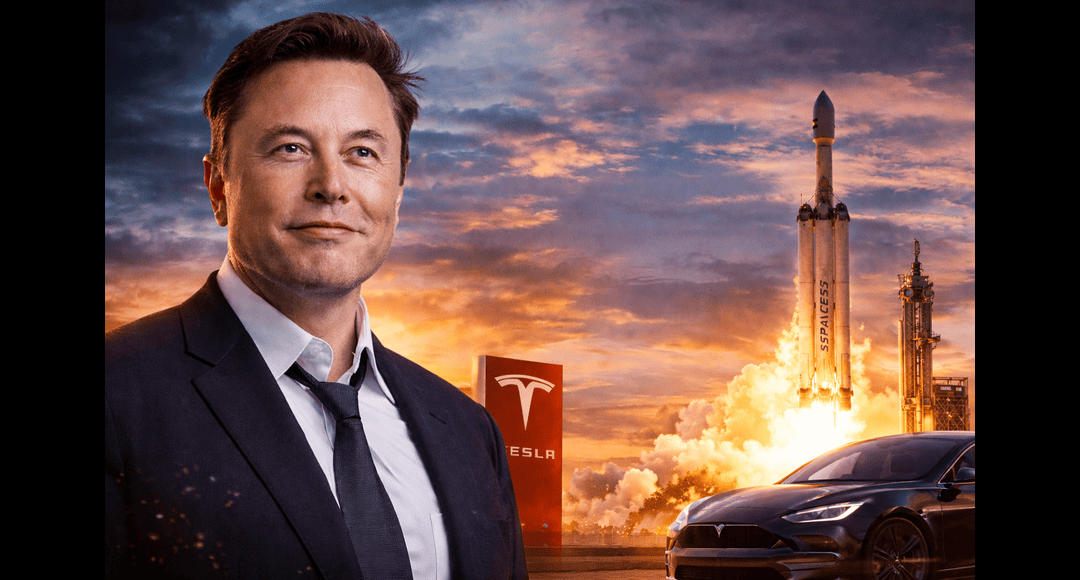
Elon Musk’s net worth has climbed to around $852 billion in early 2026, according to Forbes’ real-time billionaire estimates, widening his lead as the richest person in the world. The latest valuation reflects sharp gains across his core holdings, including Tesla and the newly merged SpaceX-xAI group.
The figure places Musk hundreds of billions of dollars ahead of the second-richest individual on global wealth rankings and keeps him within striking distance of a milestone that once seemed theoretical: a personal fortune approaching $1 trillion.
How Musk’s Wealth Reached New Heights
Musk’s fortune remains overwhelmingly tied to equity rather than cash. His holdings in Tesla, where he is the largest shareholder, continue to represent a major share of his net worth. Meanwhile, the valuation of SpaceX has risen significantly following its strategic merger with artificial intelligence company xAI in a deal reported to value the combined business at roughly $1.25 trillion.
That merger has reshaped Musk’s financial profile. By consolidating space technology, satellite broadband and artificial intelligence under one umbrella, investors have assigned a higher growth premium to the group’s long-term prospects.
Because much of Musk’s wealth is linked to private company valuations and concentrated shareholdings, fluctuations can be sharp. Even small percentage moves in Tesla’s share price can translate into tens of billions of dollars added or erased from his paper fortune within days.
The Gap Between Musk and Everyone Else
At an estimated $852 billion, Musk’s wealth sits far ahead of other technology founders and industrial magnates. The scale of that gap underscores how dominant his position has become within global capital markets.
For comparison, the difference between Musk and the next wealthiest individuals runs into several hundred billion dollars. That margin is larger than the total fortunes of many prominent billionaires combined.
Such concentration is historically rare. Modern billionaire rankings have previously been led by figures such as Jeff Bezos or Bernard Arnault, but none have sustained a gap of this magnitude for long periods.
Net Worth Versus Spendable Wealth
Despite the headline figure, it is important to understand what net worth represents. Musk does not hold hundreds of billions in cash. His wealth is largely composed of shares in companies he controls or has significant stakes in.
Selling large portions of those holdings would trigger market reactions and potential tax consequences. In practice, therefore, his “net worth” reflects valuation rather than liquidity.
Still, the symbolic impact of crossing the $850 billion threshold is significant. Wealth rankings influence investor sentiment, public perception and the narrative surrounding high-growth sectors such as electric vehicles, artificial intelligence and space technology.
Why 2026 Matters
The current surge comes at a pivotal moment for Musk’s businesses. Tesla continues to expand its electric vehicle production and battery technology, while SpaceX is scaling its satellite network and launch capacity. The integration of artificial intelligence capabilities into both automotive and aerospace ventures has added a fresh layer of investor enthusiasm.
Market analysts suggest that further gains could depend on whether the SpaceX-xAI entity proceeds with a public listing. A successful IPO would provide clearer market pricing and could materially alter Musk’s official net worth calculation.
At the same time, technology markets remain volatile. Regulatory changes, global economic conditions and shifts in investor appetite could influence valuations throughout the year.
Could Musk Become a Trillionaire
With an estimated fortune above $850 billion, speculation about Musk becoming the first trillionaire has intensified. While that milestone would still require substantial additional growth, recent gains show how rapidly valuations can move when private and public markets align in his favour.
Whether he reaches that figure will depend on company performance rather than salary or dividends. Musk’s wealth is a direct function of market belief in the long-term value of his enterprises.
