


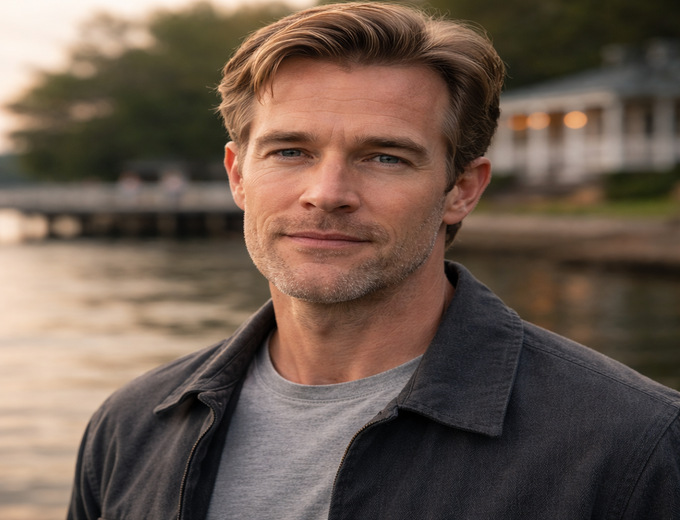
James Van Der Beek, the American actor who rose to international fame as Dawson Leery in the late-1990s television drama Dawson’s Creek, has died at the age of 48.
His death was confirmed in reports carried by the BBC. Details surrounding the circumstances have not been publicly disclosed. Tributes from colleagues and fans began to appear shortly after the news emerged, many reflecting on the impact his breakout role had on a generation of television viewers.
Van Der Beek became one of the most recognisable faces of youth drama at the turn of the millennium. For audiences in the UK as well as the United States, his performance helped define an era when teen television took on a new emotional seriousness.
From Connecticut to prime-time fame
Born in 1977 in Connecticut, Van Der Beek developed an interest in acting at a young age and began performing in theatre before moving into television and film. His breakthrough came in 1998 when he was cast in Dawson’s Creek, a series that would become a cultural touchstone.
The programme followed a group of teenagers in the fictional town of Capeside, Massachusetts, navigating friendship, ambition and relationships. Van Der Beek’s character, Dawson Leery, was an aspiring filmmaker whose introspective personality and emotional candour distinguished him from earlier depictions of teenage male leads.
The show ran for six seasons and achieved strong ratings during its initial broadcast. It was widely exported, building a substantial following in the UK, where American youth dramas were gaining increasing prominence on terrestrial and satellite channels.
The role that defined a generation
At its height, Dawson’s Creek was both celebrated and satirised for its earnest dialogue and heightened emotional stakes. Yet its influence on later teen dramas was clear. It treated adolescence not as light entertainment but as a formative and often turbulent period worthy of serious storytelling.
Van Der Beek anchored the series alongside co-stars including Katie Holmes, Michelle Williams and Joshua Jackson. While several members of the cast went on to prominent film careers, Van Der Beek remained closely associated with Dawson Leery, a character whose emotional monologues became emblematic of late-1990s television.
For many British viewers who watched during its original run, the series became a shared cultural reference point. It arrived at a time when youth programming was evolving, embracing serialised plots and more complex character development.
Life and career beyond Dawson’s Creek
Following the conclusion of the series in 2003, Van Der Beek continued to work across television and film. He appeared in a range of roles that sought to broaden his professional identity beyond his early fame.
In later years, he became known for a degree of self-awareness about his public image. In certain television appearances, he played exaggerated versions of himself, gently parodying the legacy of Dawson Leery. The performances were widely seen as evidence of his willingness to engage with the cultural imprint of his early career rather than resist it.
Industry commentators have often noted the difficulty faced by actors who achieve rapid recognition in youth roles. Sustaining a career beyond that initial success requires adaptability and resilience. Van Der Beek’s continued presence in television over two decades suggested a steady commitment to his craft.
Reaction to his death
News of Van Der Beek’s death prompted tributes from fellow actors and fans across social media. Many described him as thoughtful and generous, recalling his work on set and the connection audiences felt to his performances.
For viewers who came of age during the late 1990s and early 2000s, Dawson’s Creek formed part of their adolescence. Messages shared online frequently referenced how the series explored themes of aspiration, friendship and identity with an emotional intensity that felt new at the time.
Although details surrounding his death have not been fully disclosed, the breadth of reaction indicates the enduring reach of his work.
A lasting cultural imprint
Television in the late 1990s was undergoing transformation. Youth dramas were beginning to command mainstream attention, and series such as Dawson’s Creek played a central role in that shift. They combined personal storytelling with a cinematic style that set a template for future productions.
Van Der Beek’s portrayal of Dawson Leery captured a specific moment in popular culture, one defined by introspection and sincerity. While some of its stylistic choices were later parodied, the show’s influence remains evident in contemporary teen dramas that prioritise character depth and emotional realism.
Streaming platforms have reintroduced the series to new audiences in recent years, ensuring its continued relevance. In that sense, Van Der Beek’s work endures not only as a memory for those who first watched it, but as an accessible part of television history.
Remembering a familiar face of 1990s television
James Van Der Beek’s death at 48 marks the loss of an actor whose career became closely intertwined with a defining chapter in youth programming. While his later work demonstrated range and self-awareness, it was his early performance that secured his place in the cultural landscape.
As tributes continue, many will remember him not simply as Dawson Leery, but as a performer who helped shape the tone of an entire era of television.
Further updates are expected as more information becomes available.
