



Public trust in British news media has entered a period of measurable strain, according to recent industry data and academic research. While digital readership continues to grow, confidence in news accuracy, fairness, and independence has failed to keep pace. This widening gap between consumption and trust is now shaping editorial strategy across the UK media landscape.
Evidence from long-running audience studies shows that trust is no longer assumed. Instead, it is increasingly earned on a story-by-story basis, with readers scrutinising sources, language, and institutional credibility more closely than at any point in the past decade.
Trust Levels in UK News
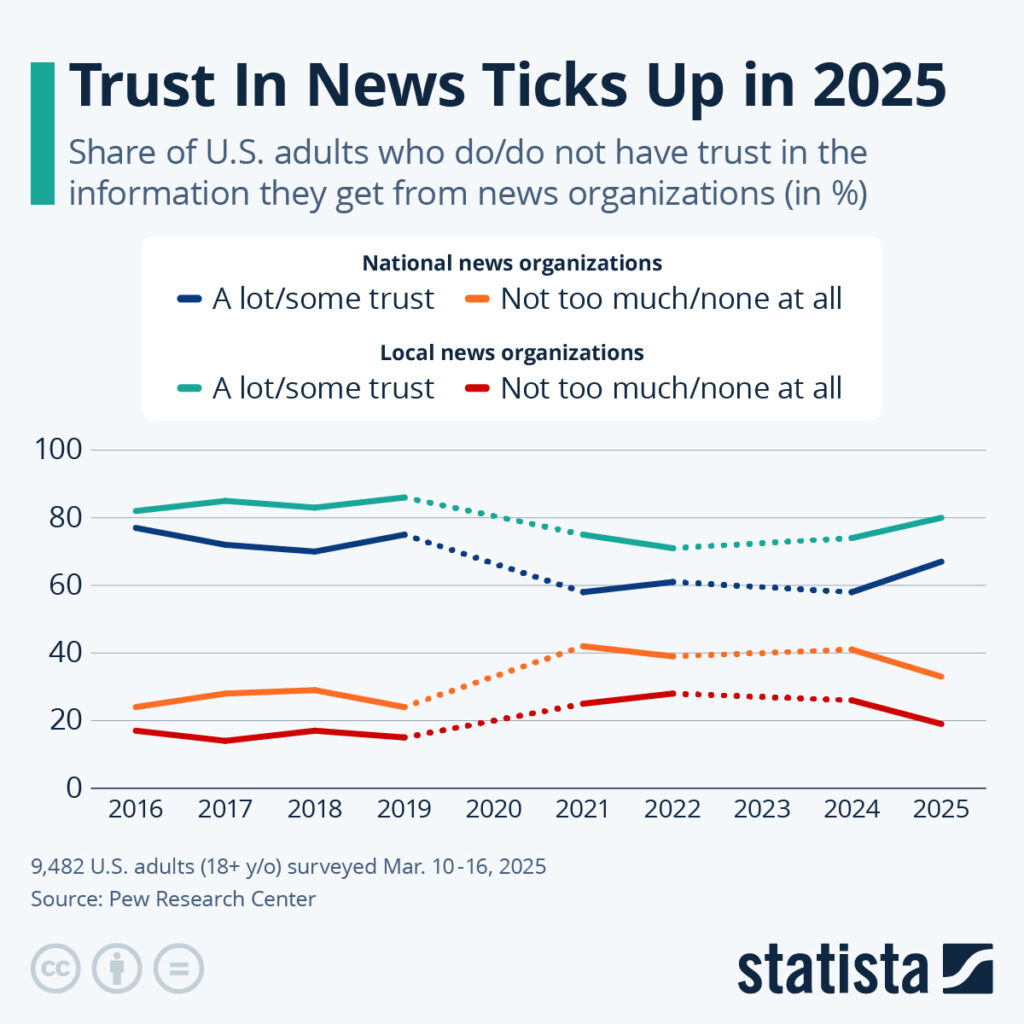
The most widely cited benchmark for media trust is the Reuters Institute for the Study of Journalism Digital News Report 2024. Its UK findings reveal that only 36 per cent of respondents say they trust most news most of the time, a figure that has remained largely flat since 2021 despite rising digital subscriptions.
Notably, trust varies sharply by platform. Traditional broadcasters continue to outperform digital-only publishers. According to the same report, BBC News remains the most trusted major news source in the UK, while trust in news encountered via social media platforms falls below 25 per cent. This distinction highlights that the issue is not rejection of journalism itself, but scepticism towards how and where news is distributed.
Audience Reach Is Rising Despite Trust Concerns
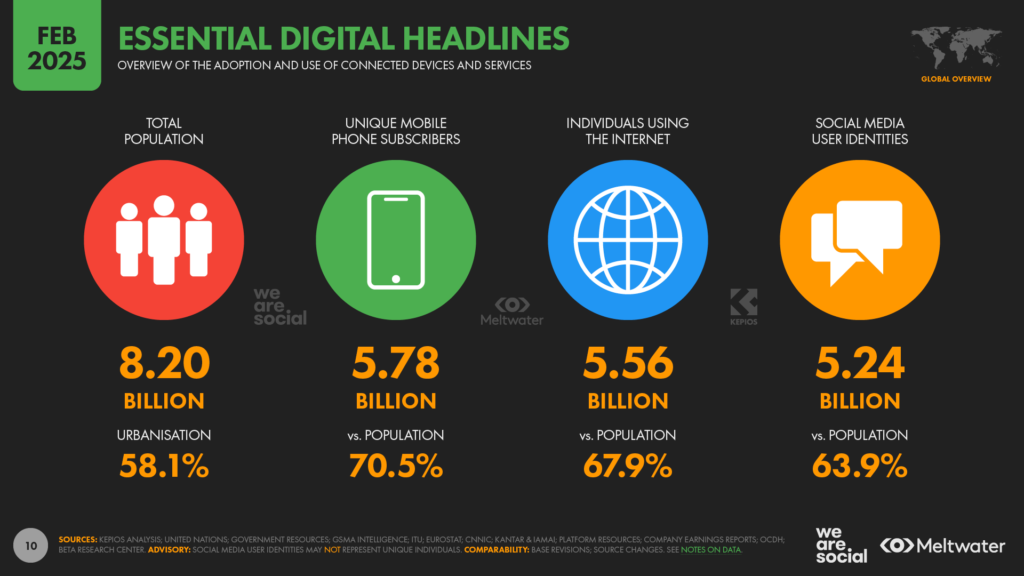
While trust has stagnated, audience reach has not declined. Data from Ofcom’s News Consumption in the UK report shows that more than 85 per cent of UK adults access news online at least once a week, with smartphones now the primary device for news access.
This creates a paradox. British audiences are more connected to news than ever before, yet less confident in its reliability. For publishers, this has increased pressure to demonstrate transparency, accuracy, and editorial independence within the article itself rather than relying on brand reputation alone.
Political Coverage and Perceived Bias
Perceived political bias remains one of the strongest drivers of distrust. Survey data from YouGov indicates that a majority of UK respondents believe national media outlets favour one political viewpoint over another, particularly during election cycles.
This perception persists even when factual accuracy is not directly challenged. Media analysts note that tone, headline framing, and story placement now influence trust almost as much as content accuracy. As a result, many UK newsrooms have strengthened internal guidelines on language neutrality and sourcing balance, especially in political reporting.
Expert Insight
Media researchers argue that trust erosion is closely linked to the digital news cycle. Professor Rasmus Kleis Nielsen, Director of the Reuters Institute, has repeatedly stated in public research briefings that audiences are not rejecting journalism, but they are rejecting uncertainty presented as certainty.
In practice, this means readers expect journalists to acknowledge what is not yet known, to update stories clearly, and to correct errors visibly. Silent edits and anonymous sourcing, once accepted newsroom practices, now actively undermine credibility when discovered by readers.
Data Journalism and Source Visibility as Trust Signals
One measurable trend emerging from UK publisher analytics is the performance of articles that include primary data and clearly cited sources. According to internal publisher studies referenced by the Reuters Institute, stories that link directly to official datasets, parliamentary records, or academic research achieve longer read times and higher return visits.
This has accelerated the adoption of data-led reporting across business, health, and public policy coverage. When readers can trace claims back to authoritative sources such as the Office for National Statistics or peer-reviewed studies, confidence improves, even on contentious topics.
The Impact of Corrections on Reader Confidence
Correction handling has also become a trust metric. Ofcom research shows that readers respond more positively to outlets that issue prompt, clearly labelled corrections than to those that attempt to minimise or obscure mistakes. Transparency in error management now functions as evidence of editorial integrity rather than weakness.
UK publishers that maintain publicly accessible corrections policies are increasingly viewed as more accountable, particularly among younger audiences who have grown up questioning online information by default.
What the Data Suggests for UK News Publishers
The data presents a clear message. Trust cannot be rebuilt through volume or speed alone. It requires consistent evidence of expertise, openness, and editorial responsibility. UK readers are willing to engage deeply with news when they believe it respects their intelligence and acknowledges complexity.
For digital-first platforms such as britishwire.co.uk, this creates an opportunity rather than a limitation. By grounding reporting in verified data, expert insight, and transparent sourcing, publishers can distinguish themselves in an environment where credibility has become the primary differentiator.
