


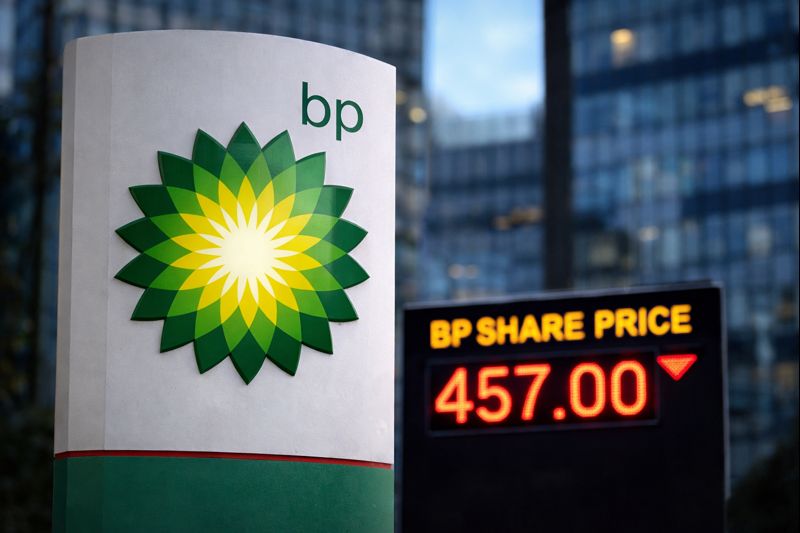
BP’s share price has been under pressure in recent sessions on the BP plc stock market, with the energy giant’s London-listed shares dipping as oil prices eased and investors weighed a complex set of strategic and economic factors. The shifts come amid broader uncertainty for major oil and gas companies balancing traditional fossil fuel operations with long-term strategic pivots.
On Friday morning trading in London, BP shares fell about 1.2 per cent, trading around 457 pence per share, down by roughly 5.65 pence from the prior session. This followed a pull-back in global oil benchmarks after recent volatility, which in turn influenced energy sector equities.
Latest Market Moves and Trading Context
Although BP’s share price has shown periods of resilience over the past year, with an overall positive trend, the recent retreat highlights how sensitive energy stocks remain to commodity price dynamics and investor sentiment. According to market data, BP’s London Stock Exchange (LSE) listing currently sits lower than its 52-week high of about 476 pence, reflecting this recent uneven performance.
On individual trading days this week, the shares have shown mixed signals. Mid-week data pointed to modest gains relative to the wider FTSE 100 index before the pull-back. For example, BP outperformed broader market averages in sessions earlier this week, with rises of around 1.62 per cent and 1.45 per cent on trading days prior to the latest decline.
Such oscillations often mirror broader shifts in investor appetite for energy stocks. Analysts note that in an uncertain macroeconomic climate, oil majors can swing between defensive demand as dividend payers and reactive moves tied to oil price momentum.
Commodity Prices and Oil Market Influence
Energy shares like BP typically move in tandem with changes in crude oil and related commodity prices. On global markets, Brent crude recently climbed above $70 per barrel amid geopolitical concerns, particularly heightened tensions in the Middle East region. That surge initially buoyed many energy stocks before markets digested the wider implications for inflation and global economic growth.
Oil price rises can lift revenue expectations for integrated oil and gas producers, but investors also watch broader demand prospects and the pace of energy transition trends. For BP, short-term gains tied to oil volatility may be tempered by longer-term concerns about energy mix and climate strategy, especially as peers accelerate investments in renewables.
Strategic Shifts and Corporate Developments
BP’s stock performance cannot be viewed in isolation from the company’s ongoing strategic evolution. In recent years, the group has oscillated between reinforcing conventional oil and gas operations and carving out a credible role in future energy markets. Notably, BP announced a substantial writedown in its green energy business earlier this month, a signal of shifting priorities and cost-base recalibration in response to market realities.
In late 2025, BP also appointed Meg O’Neill, a former Woodside Energy executive, as its next chief executive, marking a significant leadership change. This succession follows the earlier departure of BP’s previous CEO after a relatively short tenure, reflecting a board keen to reshape investor confidence and strategic direction.
For investors, such high-profile leadership changes are often double-edged: they can signal a fresh vision but also introduce transitional uncertainty. BP’s move back toward traditional hydrocarbons after earlier renewable commitments has drawn scrutiny from environmental advocates and some market analysts, adding further complexity to the share price narrative.
Dividends, Buybacks and Investor Returns
One of the enduring appeals of BP’s stock for income-focused investors is its dividend yield and capital return mechanisms. The company has run share buyback programmes designed to support shareholder value, including a significant repurchase activity last year. This form of capital return can sustain investor interest even when underlying oil and gas prices soften.
Market commentators also highlight BP’s positioning as a sizeable constituent of the FTSE 100 index. Its performance tends to have broader implications for UK equity markets, particularly given the weighting of energy brands in the benchmark.
Analyst Views and Future Prospects
Against the backdrop of recent price swings, some analysts remain optimistic about BP’s medium-term prospects. A handful of forecasts published earlier this month suggested potential for stronger share price appreciation through 2026, driven by expectations of disciplined capital allocation and improving earnings trajectories.
Technical analysts, meanwhile, have pointed to momentum indicators showing improvement in BP’s Relative Strength Rating on overseas listings, hinting at a possible breakout if broader market conditions remain supportive.
However, risks persist. Cooling oil prices, uncertain global economic growth, and BP’s internal strategy shifts all contribute to a wide range of potential outcomes for the share price. As with many commodity-linked equities, trading patterns may continue to reflect short-term volatility even as the company works to articulate a longer-term energy transition narrative.
Broader Market Context
BP’s share price developments occur against the backdrop of fluctuating investor sentiment across sectors. The FTSE 100, the UK’s primary indices benchmark, has been sensitive to broader macro drivers like inflation expectations, currency movements and global growth forecasts. In some sessions this week, BP lifted alongside other energy and mining stocks, while more cyclical or tech-oriented names showed divergent performance.
The oil industry remains at an inflection point between reinforcing fossil fuel supply roles and aligning with net-zero ambitions, and investors increasingly price in this strategic tension. BP’s ability to balance immediate shareholder returns with longer-term investment in renewable energy and lower-carbon technologies will likely influence sentiment as 2026 unfolds.
What Investors Should Watch Next
Looking ahead, market participants will monitor several key indicators for BP’s share price trajectory. These include quarterly earnings guidance, oil price movements amid geopolitical shifts, and further clarity on BP’s capital allocation strategy under new leadership.
Upcoming corporate updates, including earnings reports expected in early February, could provide more timely insights into operational performance and cash flow trends. Broader economic signals, from inflation data to central bank policy moves, also remain critical for setting the tone in commodity markets.
For now, BP’s share price sits in a phase of cautious recalibration, influenced by a blend of sector dynamics, strategic shifts and global market influences. As the company navigates these intersecting pressures, investors will be watching how shifts above and below key technical price levels play out in the coming weeks.
