


Shares in J Sainsbury plc, one of the UK’s leading supermarket groups and a staple of the FTSE 100, have experienced notable fluctuations in recent weeks amid a complex set of market drivers including a substantial stake sale by a key investor and uneven trading performance across the business. Investors are closely watching the stock as both short-term pressures and longer-term strategic considerations shape sentiment around one of Britain’s biggest retail names.
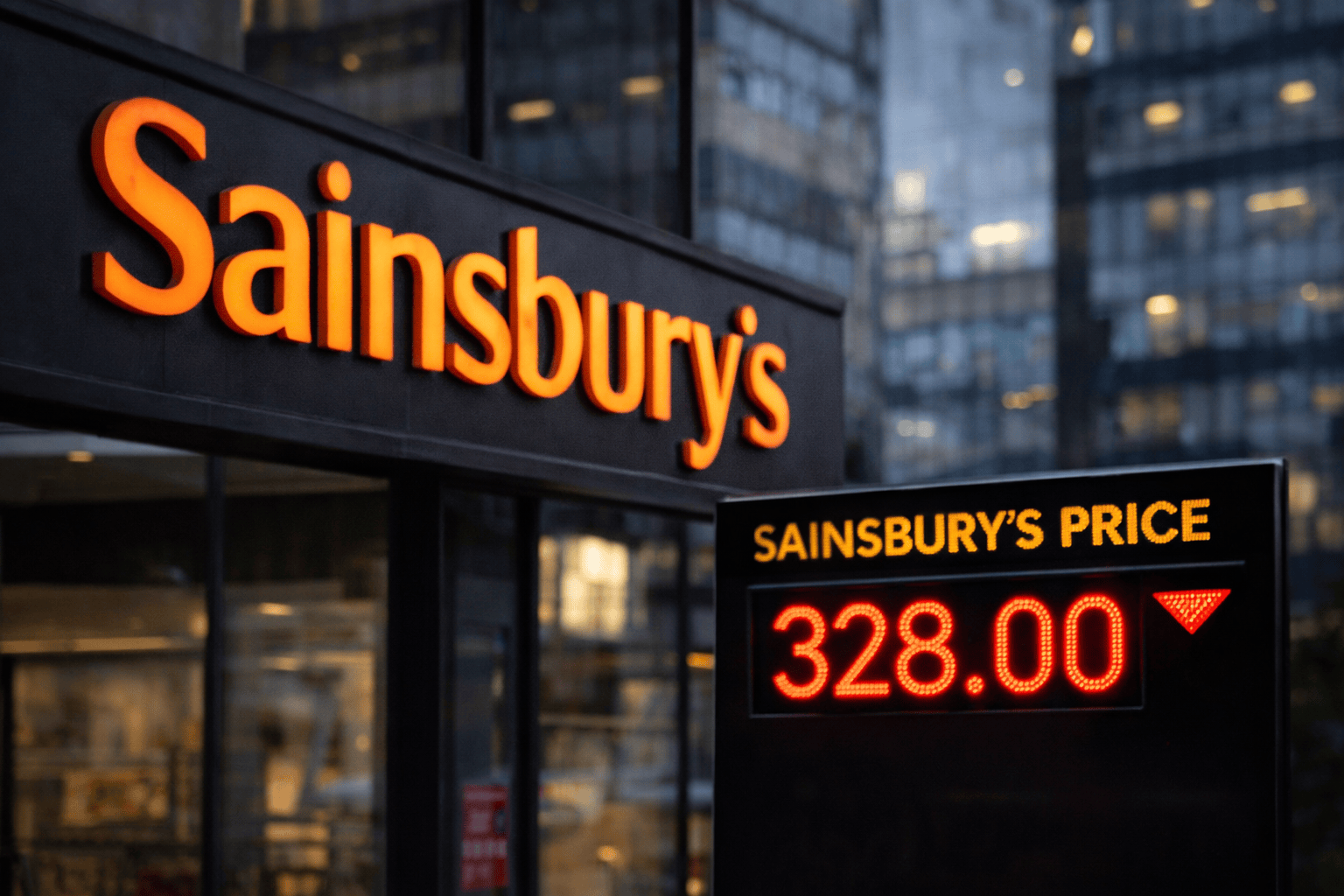
On the London Stock Exchange, Sainsbury’s shares have been trading below their recent peak, with the SBRY:LSE listing changing hands in the low- to mid-300p range. According to market data, the stock closed at around 328p, which remains nearly 9 per cent below its 52-week high of around 360p established in late 2025. Despite this pull-back, the share price has still delivered solid performance over the past year, reflecting broad recovery in the UK grocery sector.
Stake Sale by Key Shareholder Triggers Market Reaction
One of the most significant developments affecting Sainsbury’s share price in recent weeks has been a large share sale by the Qatar Investment Authority, the supermarket group’s largest external investor. The sovereign wealth fund moved to cut its stake by nearly four percentage points in a transaction worth several hundred million pounds. This marked a departure from a prolonged period in which the fund had maintained a dominant position among Sainsbury’s institutional holders, and it triggered a slide in the stock amid heavy trading in the secondary offering.
On the day of the placement, Sainsbury’s shares were among the worst performers on the FTSE 100, falling more than four per cent in early session trading. While such stock sales are not uncommon for large institutional holders, the scale of the reduction and the visibility of the transaction heightened short-term volatility and raised questions among some investors about confidence in the group’s near-term prospects.
Trading Performance and Retail Dynamics
Beyond headline share movements, Sainsbury’s performance has reflected mixed signals from its underlying retail operations. While the company has reported strong grocery sales at certain points, its non-food divisions, including the Argos general merchandise arm, have underperformed, tempering overall investor enthusiasm. Market reports have pointed to weaker results from these areas during key trading periods, which weighed on the supermarket’s share price even as grocery sales remained resilient.
Analysts note that in the context of a competitive UK retail environment, Sainsbury’s results underscore ongoing challenges in balancing growth across multiple segments. While demand for everyday necessities has remained robust, segments exposed to discretionary consumer spending have faced greater headwinds amid broader economic pressures, including cost-of-living concerns and shifting shopping patterns.
Broader Market Factors and Sector Comparisons
Sainsbury’s share price movements also mirror wider trends in the UK stock market and the retail sector more broadly. The FTSE 100 index has experienced periods of volatility driven by macroeconomic data, central bank policy expectations and varying performance across key sectors. Against this backdrop, supermarket stocks have often oscillated in response to investor appetite for defensive equities versus growth-oriented assets.
In comparisons with peers, competitors such as Tesco and other grocery chains have at times outperformed Sainsbury’s, adding nuance to investor assessments of strategic positioning. Investors frequently weigh factors such as market share gains, cost-efficiency efforts and pricing strategies when differentiating between rival supermarket groups.
Company Fundamentals and Outlook
Despite recent share price pressures, Sainsbury’s retains core strengths that underpin investor interest. Over the past year, the stock has delivered a healthy percentage gain relative to longer-term lows, reflecting resilience in the UK consumer staples space. Data from financial services platforms indicate a one-year price change in the order of around 15 to 20 per cent, a performance that many market watchers interpret as evidence of steady underlying demand for the group’s offerings.
Analyst forecasts gathered from market data suggest a range of potential price targets for Sainsbury’s in the coming 12 months, with averages pointing toward modest upside from current levels, though forecasts vary broadly based on differing assumptions about earnings growth and sector dynamics.
Investors also look closely at the company’s broader fundamentals, including revenue trends, profitability and dividend policy, as well as strategic announcements from the board and executive leadership. Sainsbury’s diversified business model spanning food retail, general merchandise, clothing and financial services, provides multiple revenue streams that can help offset volatility in any single segment.
Strategic and Competitive Challenges Ahead
Looking ahead, Sainsbury’s faces a competitive landscape where pricing pressures, supply chain dynamics and consumer preferences continue to evolve. The supermarket sector in the UK has seen intense competition on price and service quality, with rivals investing in convenience formats, online delivery and loyalty programmes.
Strategists and investors will be watching how Sainsbury’s navigates these pressures, particularly in segments where performance has lagged. Management initiatives aimed at strengthening cost efficiency, improving customer experience and enhancing digital and online offerings will likely play a role in shaping market perceptions of the stock’s prospects.
Even as the immediate impact of the Qatar stake sale recedes in traders’ minds, the episode highlighted how ownership changes and large institutional moves can interact with broader market sentiment to influence share price behaviour. For shareholders and prospective investors, understanding these interconnected forces remains essential when assessing one of the UK’s most recognised retail brands.
