


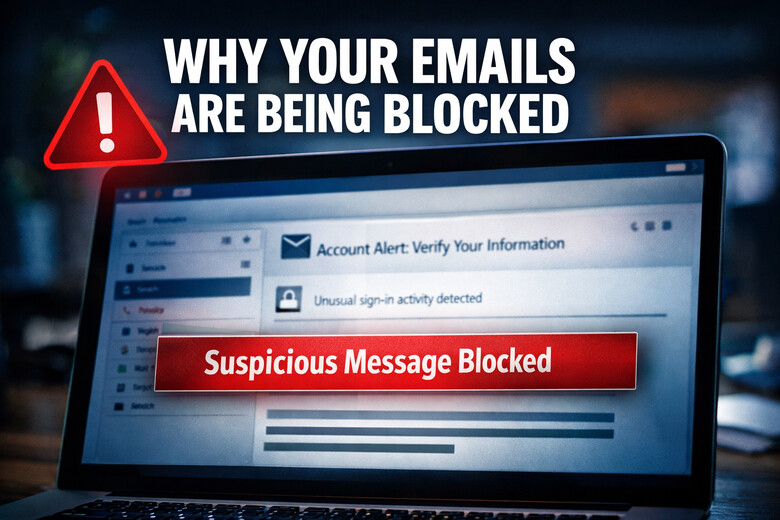
Phishing is now one of the most pervasive cyber-security threats facing individuals, businesses and public services. Once dismissed as crude scam emails, phishing attacks have evolved into sophisticated social-engineering instruments that harvest passwords, payment details and corporate credentials on an industrial scale. As digital dependency grows, so does the ingenuity of attackers and even major technology companies such as Microsoft can find themselves caught in the cross-fire between threat detection and legitimate email delivery.
Defining Phishing: The Modern Digital Scam
At its core, phishing is a form of cyber-attack that uses fraudulent messages usually via email, but also increasingly through text messages, phone calls and other channels to deceive people into revealing sensitive personal information. Attackers masquerade as trusted entities, such as banks, government agencies or well-known brands, to convince recipients that a message is genuine. The ultimate goal is to steal login credentials, financial data or other confidential material.
The term derives from the analogy of “fishing”: just as a fisherman uses bait to catch fish, criminals lure victims into taking the action that compromises them. Phishing is not a technical exploit in the traditional sense it relies ,on psychological manipulation and deception, exploiting human trust mechanisms rather than software vulnerabilities.
A Scalable Threat Across Platforms
Historically, phishing was synonymous with emails containing suspicious links or attachments. Today, attackers leverage a wide range of vectors. Short messaging service (SMS) phishing dubbed smishing and fraudulent voice calls (vishing) have blurred the lines of traditional attack routes. Even QR codes and social media direct messages are now used to bypass conventional defences.
Phishing campaigns can be indiscriminate, sending thousands of mass-generated emails, or highly targeted. Spear phishing focuses on specific individuals or organisations, using personal details to craft convincing messages, while whaling aims at executives or high-value targets. These variants increase the likelihood that a deceptive email or message will elicit a response.
How Phishing Works in Practice
A typical phishing email might resemble a legitimate communication from a bank or online service. It often contains urgent language; for example, warning that an account will be closed if the recipient does not verify credentials immediately. The message directs the recipient to a fraudulent website that visually imitates a real login page. When the victim enters their username and password, the information goes straight to the attacker.
Some phishing attacks go further, bundling malware payloads disguised as attachments or links. If clicked, these files can install malicious software that harvests data, locks systems (ransomware), or creates backdoors into networks. The combination of social engineering and hidden code makes phishing a potent first step in larger cyber-crime campaigns.
The Fallout: Cost and Consequences
The impact of phishing extends far beyond individual woes. For individuals, compromised accounts can lead to stolen funds, identity theft and long-term credit issues. For organisations, a successful phishing attack can expose corporate credentials, enabling wider network breaches that lead to data loss, regulatory penalties and reputational damage.
Cybersecurity investigations consistently place phishing at the top of incident reports. In the UK, the National Cyber Security Centre highlights that phishing remains a leading cause of reported cyber-security incidents, often serving as the initial entry point for more damaging breaches. Globally, its prevalence grows as attackers refine their tactics and target new platforms.
Why Big Tech Still Struggles
Major technology companies invest heavily in anti-phishing defences, deploying machine-learning filters and heuristic analysis to identify and block suspicious messages. Despite these investments, striking a balance between threat detection and legitimate communication remains difficult. A recent incident affecting Microsoft 365 users exemplifies this challenge.
According to reports, a newly deployed URL-detection rule intended to catch advanced phishing links began misidentifying safe URLs as malicious. This led to widespread email delivery issues because legitimate messages were flagged and blocked, even when sent by trusted contacts. Microsoft classified the fault as a “service degradation,” underscoring how anti-phishing technology sometimes errs on the side of caution.
The episode also highlights another tension in email security: blocking harmful content without disrupting legitimate business communications. Overly aggressive filters can lead to false positives that undermine confidence in email systems, while insufficient filtering leaves users exposed. It’s a delicate trade-off that cybersecurity teams continuously calibrate.
Emerging Phishing Trends
Attackers have not remained static. Recent developments show phishing evolving in several concerning ways. Tools that automate phishing campaigns, such as pre-built phishing kits, have made credential theft easier for less technically skilled criminals, facilitating attacks that span dozens of countries.
Research also indicates that threat actors are exploiting complex email routing and misconfigured domain authentication policies to make malicious messages appear as if they come from within an organisation. These tactics can bypass standard filters and land phishing emails directly in inboxes.
Moreover, attackers increasingly use artificial intelligence to polish scam content, reducing spelling mistakes and visual inconsistencies that once helped users identify fraudulent emails. Modern campaigns can mimic official branding so closely that anyone might struggle to spot the deceit.
Protecting Yourself and Organisations
Cybersecurity experts urge a layered defence strategy. At the individual level, users should scrutinise unexpected messages, avoid clicking on unfamiliar links, and verify requests for sensitive information through independent channels. Enabling multi-factor authentication (MFA) adds a further safeguard, making it harder for attackers to use stolen credentials.
In organisational contexts, investment in real-time threat intelligence and advanced email filtering can reduce risk. Employee education remains crucial; since phishing relies on deception rather than technical exploits, awareness of suspicious patterns, such as mismatched email domains or urgent, unsolicited requests is a frontline defence.
