


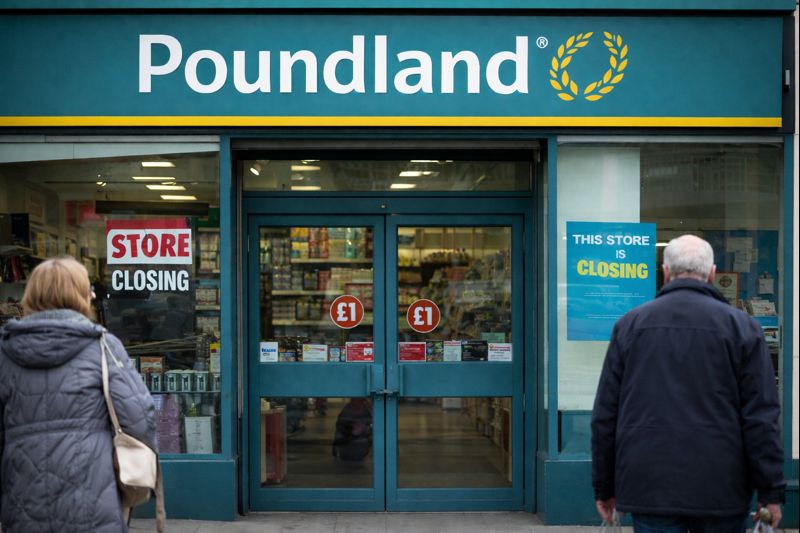
Poundland is continuing to close stores across the UK in early 2026 as part of a wider restructuring programme, underlining the sustained pressure facing Britain’s high streets. The closures follow a change in ownership last year and come amid falling footfall, rising operating costs and changing consumer behaviour.
The discount retailer, long regarded as a fixture of town centres and shopping parades, is reducing its physical footprint after a prolonged period of financial underperformance. While the company says the move is designed to secure long term stability, the impact is being felt by employees, shoppers and local economies.
Background to Poundland’s restructuring
Poundland’s current position dates back to 2025, when its former owner Pepco Group sold the business to US investment firm Gordon Brothers for a nominal sum. The sale followed mounting losses, with Pepco pointing to weak consumer demand and higher operating costs.
At the time of the transaction, Poundland operated around 800 stores across the UK and Ireland and employed approximately 16,000 people. A court approved restructuring plan set out proposals to reduce the estate to between 650 and 700 stores, alongside the closure of distribution centres and changes to the product range.
According to Reuters, at least 68 stores were initially identified for closure, with further locations assessed on an ongoing basis depending on lease conditions and trading performance.
Stores closing in early 2026
In recent weeks, Poundland has confirmed a further wave of store closures across England, scheduled between January and February 2026. The decisions form part of the existing restructuring plan rather than a new round of emergency measures.
Confirmed closure dates by location
Poundland has confirmed that several stores will close permanently during January and February 2026. The Dorchester store closed on 18 January, followed by the Plymstock branch on 20 January. The Bearwood store in Smethwick shut on 23 January, while the Gosport location is scheduled to close on 29 January.
Further closures are planned in February. The Chichester and Feltham stores are both due to close on 8 February, with the Crayford branch following on 11 February. The Chilwell store in Nottingham is expected to close on 13 February, while the Urmston branch is scheduled to shut on 16 February.
Poundland has said the closures largely reflect lease expiries and commercial viability rather than sudden operational failure. Several affected stores have been running clearance sales in the weeks leading up to closure.
Wider pressures on discount retailers
Poundland’s difficulties reflect broader challenges across the UK retail sector, including among discount chains that were once seen as resilient during economic downturns.
Data from the Office for National Statistics shows that retail footfall across Great Britain remained below pre pandemic levels throughout 2024 and 2025, with town centres experiencing some of the steepest declines. Figures from the British Retail Consortium indicate that average high street footfall is around 14 per cent lower than in 2019.
Rising costs have intensified these pressures. The National Living Wage rose again in April 2025, while energy prices and business rates have remained high. For retailers operating on narrow margins, underperforming stores have become increasingly difficult to sustain.
Impact on jobs and local communities
Each store closure brings uncertainty for staff and concern for local communities, particularly in smaller towns where Poundland often acts as an anchor retailer. While some employees may be offered redeployment, redundancies are expected in a number of cases.
Retail analysts warn that the loss of a discount store can have wider consequences for surrounding businesses. Value retailers typically drive regular footfall, supporting neighbouring shops and services. When such stores close, nearby traders often experience reduced customer numbers.
Industry estimates suggest that retail closures have contributed to a UK high street vacancy rate of more than 13 per cent, a figure that has remained stubbornly high despite post pandemic recovery efforts.
How Poundland fits into the wider retail landscape
Poundland is not alone in scaling back its physical presence. A growing number of household name retailers have announced closures or restructuring plans over the past two years, citing similar cost pressures and shifts in consumer behaviour.
While online shopping continues to expand, many value focused retailers have struggled to compete with the scale and convenience of larger digital rivals. Analysts say this has left some chains caught between rising costs and consumers who are increasingly price sensitive but less loyal to physical stores.
What happens next
For Poundland, the immediate priority is stabilising the business and protecting profitable locations. The company has said it remains committed to serving value conscious shoppers, but accepts that its store network must reflect current trading conditions.
Further closures have not been ruled out, and the full shape of Poundland’s UK estate is unlikely to be clear until later in 2026. What is clear is that the retailer’s retrenchment adds to growing evidence that the challenges facing the UK high street are structural rather than temporary.
As shoppers continue to adjust how and where they spend, and as costs remain high for physical retailers, the future of chains like Poundland will remain under close scrutiny from industry leaders and policymakers.
