


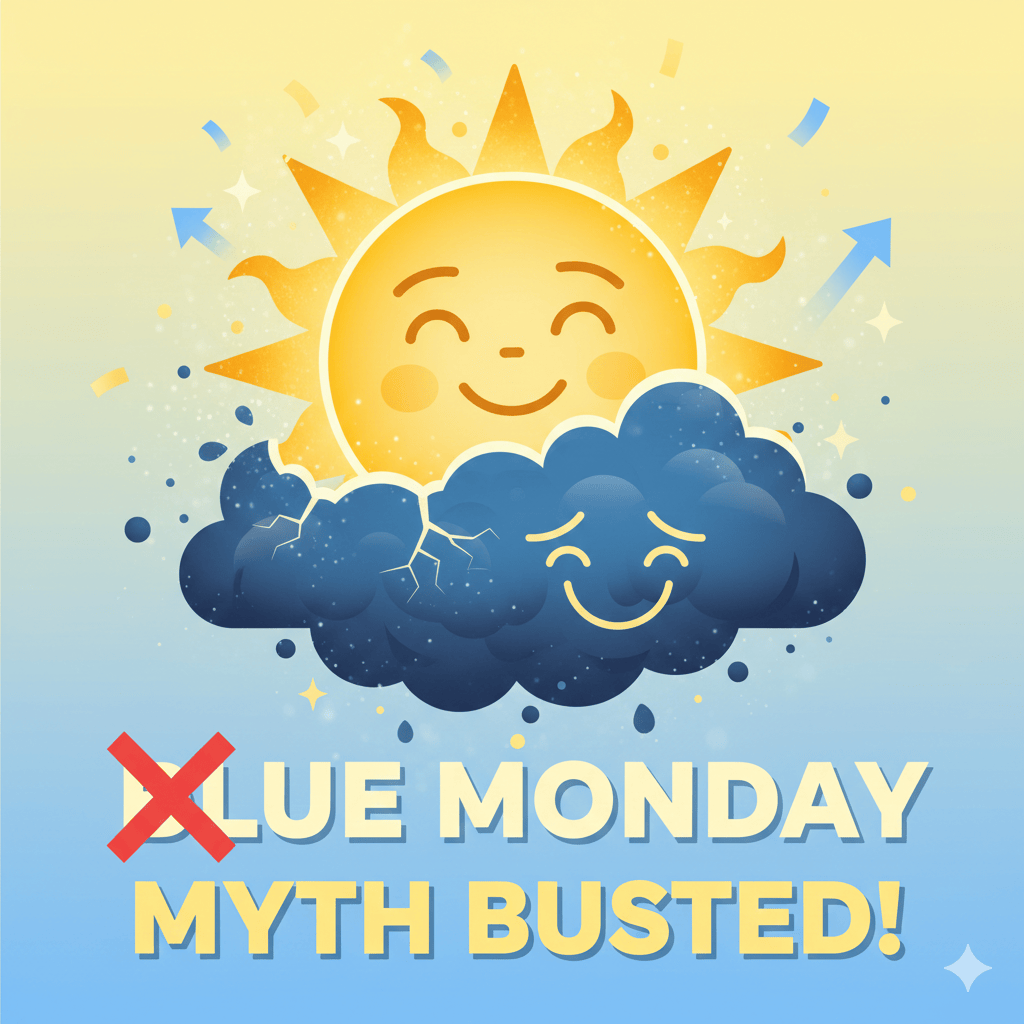
Every January, the idea of Blue Monday resurfaces in the UK media cycle, described as the “most depressing day of the year”. Typically falling on the third Monday of January, it is often linked to cold weather, post-Christmas debt and the fading of New Year’s resolutions. Yet mental health experts and academics have long challenged the concept, arguing that Blue Monday has no scientific basis and risks oversimplifying complex issues around wellbeing.
A recent explainer from BBC News has once again highlighted how the term originated and why professionals urge caution when it is presented as a genuine psychological phenomenon. The renewed focus comes at a time when conversations about mental health are increasingly prominent, particularly during winter months when many people do report lower mood and motivation.
Where Blue Monday came from
The idea of Blue Monday dates back to the mid-2000s and is widely traced to a marketing campaign rather than an academic study. It was promoted using what was described as a mathematical “formula” that supposedly calculated the most depressing day of the year by combining factors such as weather, debt levels, time since Christmas and motivation.
Psychologists and statisticians have repeatedly pointed out that the formula has never been peer-reviewed and relies on vague variables that cannot be meaningfully quantified. Over time, the creator of the concept has distanced himself from claims that it has scientific validity, acknowledging that it was used largely for promotional purposes.
Despite this, the term has persisted in public discourse, often resurfacing each January across social media, lifestyle content and advertising campaigns.
Why experts reject the science
Mental health professionals stress that emotions and mental wellbeing do not follow a calendar. According to psychologists interviewed by the BBC, there is no evidence to support the idea that one specific Monday in January is uniquely depressing compared with any other winter day.
Experts warn that labelling a particular date as “the most depressing day” risks trivialising mental health conditions such as depression and anxiety, which are influenced by a wide range of biological, psychological and social factors. These conditions do not appear suddenly on a single day and disappear the next.
There is also concern that the label may discourage people from seeking help at other times, reinforcing the false impression that low mood is only a seasonal or temporary issue.
The reality of winter wellbeing
While Blue Monday itself may be a myth, researchers acknowledge that winter can be challenging for many people. Shorter daylight hours, colder temperatures and reduced opportunities for outdoor activity can affect mood and energy levels. For some, this includes symptoms associated with Seasonal Affective Disorder, a recognised form of depression linked to reduced exposure to daylight.
Cost-of-living pressures can add to this strain. January is often a financially tight period following Christmas spending, and returning to work routines after the festive break can feel abrupt. Mental health charities note that helplines often see increased demand during winter months, reflecting a broader pattern rather than a single peak day.
The role of media and marketing
The continued popularity of Blue Monday raises questions about how mental health is discussed in public spaces. Media scholars argue that simple narratives are often easier to communicate than nuanced explanations, even when those narratives lack evidence.
Marketing campaigns have frequently used Blue Monday to promote products and services positioned as “mood boosters”, from holidays to fitness plans. Critics argue that this commercial framing can undermine genuine conversations about mental health by reducing it to a problem that can be solved with a purchase.
The BBC has repeatedly sought to challenge this framing, emphasising that while many people feel low at times in January, the concept of Blue Monday should not be treated as a medical or psychological fact.
What mental health organisations say
UK mental health charities consistently advise against focusing on Blue Monday as a standalone issue. Instead, they encourage year-round awareness of mental wellbeing and access to support.
Charities point out that feelings of sadness, stress or lack of motivation can arise at any time and may signal a need for support if they persist. Framing mental health around a single day risks diverting attention from long-term solutions, such as access to counselling, workplace flexibility and community support.
They also stress the importance of checking in on others, particularly during winter, when social isolation can increase.
How individuals can approach January pressures
Psychologists interviewed in the BBC report recommend reframing January not as a uniquely bleak period but as a time of adjustment. Rather than setting unrealistic resolutions or expecting immediate motivation, experts suggest focusing on small, manageable routines that support wellbeing.
This can include maintaining regular sleep patterns, staying connected with friends or family, and making the most of daylight hours where possible. Importantly, they emphasise that there is no obligation to feel optimistic simply because a new year has begun.
Seeking professional help is encouraged if low mood or anxiety becomes overwhelming or persistent, regardless of the date on the calendar.
A broader conversation about mental health
The annual debate around Blue Monday reflects a wider shift in how mental health is discussed in the UK. There is growing recognition that public conversations need to balance accessibility with accuracy, avoiding oversimplified messages that can obscure reality.
By challenging the myth, broadcasters such as the BBC aim to promote a more evidence-based understanding of mental wellbeing. This includes recognising that while external factors like weather and finances can influence mood, mental health is deeply individual and cannot be reduced to a formula.
Why the myth persists
Despite repeated debunking, Blue Monday continues to resonate because it offers a shared language for discussing low mood. For some, it provides reassurance that they are not alone in finding January difficult. Experts acknowledge this emotional resonance but caution against mistaking it for scientific truth.
They argue that the challenge is to keep the conversation open while grounding it in evidence, ensuring that public awareness campaigns support, rather than distort, understanding.
Moving beyond Blue Monday
As January progresses, mental health professionals encourage people to move beyond the idea of a single “worst day” and instead focus on ongoing self-care and awareness. Wellbeing, they stress, is not dictated by a calendar date but shaped by daily experiences, support networks and access to help.
In that sense, the real value of the Blue Monday debate may lie not in the label itself, but in the opportunity it creates to talk openly about mental health. When handled responsibly, that conversation can extend far beyond one Monday in January and contribute to a more informed and compassionate public understanding throughout the year.
