


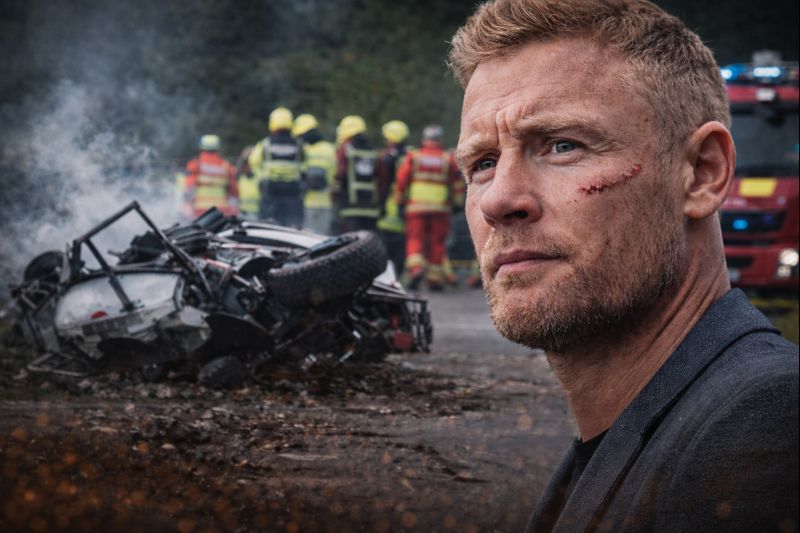
For Freddie Flintoff, the crash that left him with a scarred face was not just a television accident but a moment that almost ended his life and permanently reshaped how he sees himself. More than two years on, the former England all-rounder has spoken with unusual candour about the physical trauma, psychological fallout and slow rebuilding of confidence that followed the incident, offering the clearest picture yet of what he describes as a life-altering experience.
The crash, which occurred in December 2022 while Flintoff was filming Top Gear, forced him out of public view for months and left him confronting injuries that were both immediately visible and deeply personal. His account has resonated widely, not simply because of who he is, but because of how close he came to losing everything.
The moment the accident unfolded
The incident happened at Dunsfold Aerodrome, a former RAF base frequently used for vehicle testing and television filming. Flintoff was driving a lightweight, open-top vehicle when it overturned at speed, throwing him across the track and pinning him beneath the car.
Emergency services were called quickly, and Flintoff was airlifted to hospital. Doctors later confirmed that he had suffered serious facial injuries alongside broken ribs and other trauma. At the time, the BBC suspended filming on Top Gear, and Flintoff disappeared from public life, fuelling speculation about the extent of his injuries.
Living with a changed face
The most lasting consequence of the crash has been the damage to Flintoff’s face. He underwent reconstructive surgery to repair fractures and severe lacerations, with treatment continuing long after he left hospital. The scars, which he has since allowed to be seen publicly, became a source of anxiety during his recovery.
Flintoff has spoken about the psychological weight of adjusting to his appearance, describing moments when he avoided mirrors and struggled with the idea of being recognised. For a figure whose post-cricket career had flourished in front of cameras, the loss of confidence proved as challenging as the physical pain.
He has said the crash left him questioning whether he would ever feel comfortable returning to television or public life, admitting that the emotional recovery took longer than the medical one.
Trauma beyond the injuries
While the physical wounds were severe, Flintoff has emphasised that the emotional impact ran deeper. He has described recurring anxiety, disturbed sleep and a persistent awareness of how close he came to death. At one point, he said, he genuinely believed he would not survive the crash.
That sense of vulnerability marked a stark contrast with the image many associate with Flintoff from his playing days, the fearless fast bowler and Ashes hero who thrived under pressure. The crash stripped away that armour, forcing him to confront trauma in a way he had never experienced before.
Mental health specialists note that such reactions are common after serious accidents, particularly when injuries affect identity and self-image. Flintoff’s willingness to discuss this aspect of recovery has been widely praised for challenging assumptions about resilience in elite sport.
Why cricket became his anchor
In the months after the accident, Flintoff gradually returned to cricket, first away from the spotlight and later in formal coaching roles. He has credited the sport with giving him structure and purpose at a time when he felt disconnected from his previous life.
Working with younger players and re-engaging with the routines of training and preparation helped him regain confidence. Cricket, he has said, reminded him that his value extended beyond television or appearance, grounding him during a period of uncertainty.
That return also marked a turning point in his recovery, signalling that while the crash had changed him, it had not taken away his connection to the game that defined his career.
A cautious return to public life
Flintoff’s re-emergence has been deliberate rather than dramatic. He has avoided rushing back into high-profile television roles, choosing instead to rebuild confidence gradually. When he has spoken publicly, the focus has been less on spectacle and more on honesty about the cost of recovery.
The BBC later reached a financial settlement with Flintoff following the accident, and Top Gear has remained off air. The episode prompted wider debate about safety standards in entertainment programming, particularly when non-professional drivers are placed in high-risk situations for filming.
Why the story still resonates
Interest in Flintoff’s crash has endured because it sits at the intersection of celebrity, vulnerability and survival. Unlike many sports injuries, this was not sustained in competition but in a second career that had come to define his life after cricket.
For audiences, the story offers something rarer than spectacle: a detailed account of how a public figure navigates trauma away from the cameras, grappling with fear, identity and recovery in real time. It also challenges assumptions about masculinity and toughness in sport, showing that resilience can include admitting fear and seeking support.
Life after the crash
Flintoff has been clear that the accident will always be part of his story, but not its conclusion. He continues to work in cricket and has cautiously re-entered television, carrying the physical reminders of what happened with him.
The scars remain visible, but so too does the determination that defined his sporting career. In speaking openly about the crash, Flintoff has reframed it not as a moment of defeat, but as a brutal turning point that forced him to reassess what matters most.
