


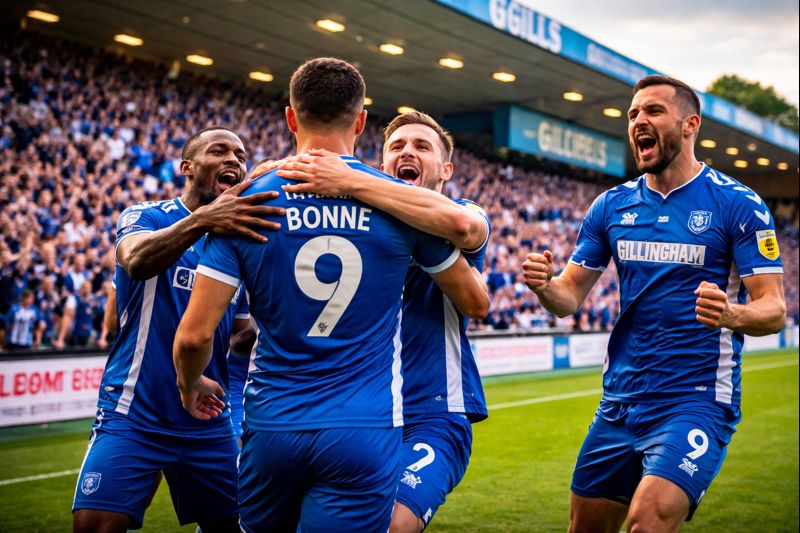
Gillingham Football Club, the professional side based in Kent competing in League Two, has taken a cautious stance in the January transfer window, underscoring financial prudence rather than aggressive recruitment. With the winter window drawing to a close, the club’s leadership has emphasised strategic stability over short-term spending, even as supporters assess the team’s prospects for the remainder of the 2025-26 campaign.
Financial Prudence in a Tight Market
In early January, Gillingham’s managing director addressed growing speculation among fans and local media about potential mid-season signings. The message was clear: the club will not engage in “cheque-book panic” to secure players merely to appease supporters or react to rivals’ activity.
This approach marks a deliberate divergence from the behaviour of some League Two clubs that have dipped heavily into their transfer budgets in an attempt to climb the table. Instead, Gillingham’s decision reflects a strategy centred on fiscal sustainability. The managing director’s comments reiterated confidence in the squad assembled at MEMS Priestfield Stadium, as well as the club’s long-term development framework.
The decision comes against a backdrop of financial pressures across the lower leagues, where revenue streams are narrower and operational costs, particularly wages have risen. For Gillingham, balancing ambition with stability has become a central theme of the club’s leadership as they progress through the season.
Current League Two Campaign
On the field, the 2025-26 season has been a period of consolidation for the Gills. They occupy a mid-table position in League Two, with results that have shown promise but also highlighted the challenges of competing in one of English football’s most unpredictable divisions.
Under Gareth Ainsworth, who took over managerial duties in March 2025, Gillingham recorded a notable unbeaten run that demonstrated the squad’s capacity to compete over a sustained stretch. Ainsworth’s leadership through a period of transition, which included health challenges and temporary absences, underscored his influence on the dressing room and tactical identity.
Statistically, the team has avoided the kind of free-fall that can afflict clubs who overspend without coherent planning. While they have not broken into automatic promotion places, consistency in results and a stable league position suggests that the club’s board and coaching team have struck a careful balance between competitiveness and realistic long-term goals.
Club Identity and Heritage
The caution shown this January must be understood within the broader context of Gillingham FC’s history, a club deeply rooted in its local community. Founded in 1893 as New Brompton Football Club, the team adopted the current name a little over a century ago and has spent the majority of its existence in the lower tiers of the Football League.
Gillingham holds the distinction of being Kent’s only Football League club, a point of pride among supporters. The team’s highest achievement came in the early 2000s when they reached the second tier of English football for the first and only time, finishing a club-record eleventh place in the 2002-03 campaign.
Despite the ups and downs of league status over more than a century, Priestfield Stadium remains the heart of the club. Memorable cup runs and strong local engagement have sustained interest through fluctuating league fortunes, and the current strategy reflects a desire to remain financially viable while building a platform for future success.
Youth Development and Squad Cohesion
With transfer liquidity limited, Gillingham has emphasised internal development and squad cohesion. Several academy graduates have been given opportunities in the first team, providing both cost efficiency and a sense of identity that supporters value. While this approach carries risks, younger players often require time to adapt to high-pressure match environments, it also aligns with long-term sustainability, particularly for clubs outside the financial orbit of the Championship or Premier League.
Managerial leadership under Ainsworth has sought to strike a balance between youth and experience, integrating emerging talent alongside seasoned professionals. This blend aims to foster a team capable of competing week-to-week while maintaining a pipeline of players who can contribute over multiple seasons.
Implications of the January Decision
The choice not to engage in panic buying this January could have multiple implications.
In the short term, it reduces immediate financial risk. Clubs that overspend mid-season sometimes find themselves stretched, necessitating wage cuts or player sales later in the year. For Gillingham, prioritising economic health helps shield the club from such volatility.
On the pitch, the decision increases reliance on the existing squad’s resilience and adaptability. This could intensify pressure on players to perform consistently, particularly as the League Two schedule intensifies in the business end of the season. Matches against teams with deeper benches or recent signings could test Gillingham’s resolve, a situation that will provide insights into both squad depth and managerial acumen.
Longer term, the move reinforces a clear club identity. Supporters vocal about financial prudence have welcomed the stance, seeing it as aligned with sustainable club culture. For new and younger fans, particularly those drawn by League Two excitement rather than historic rivalries, this period offers an example of strategic prioritisation that may pay dividends in future seasons.
