


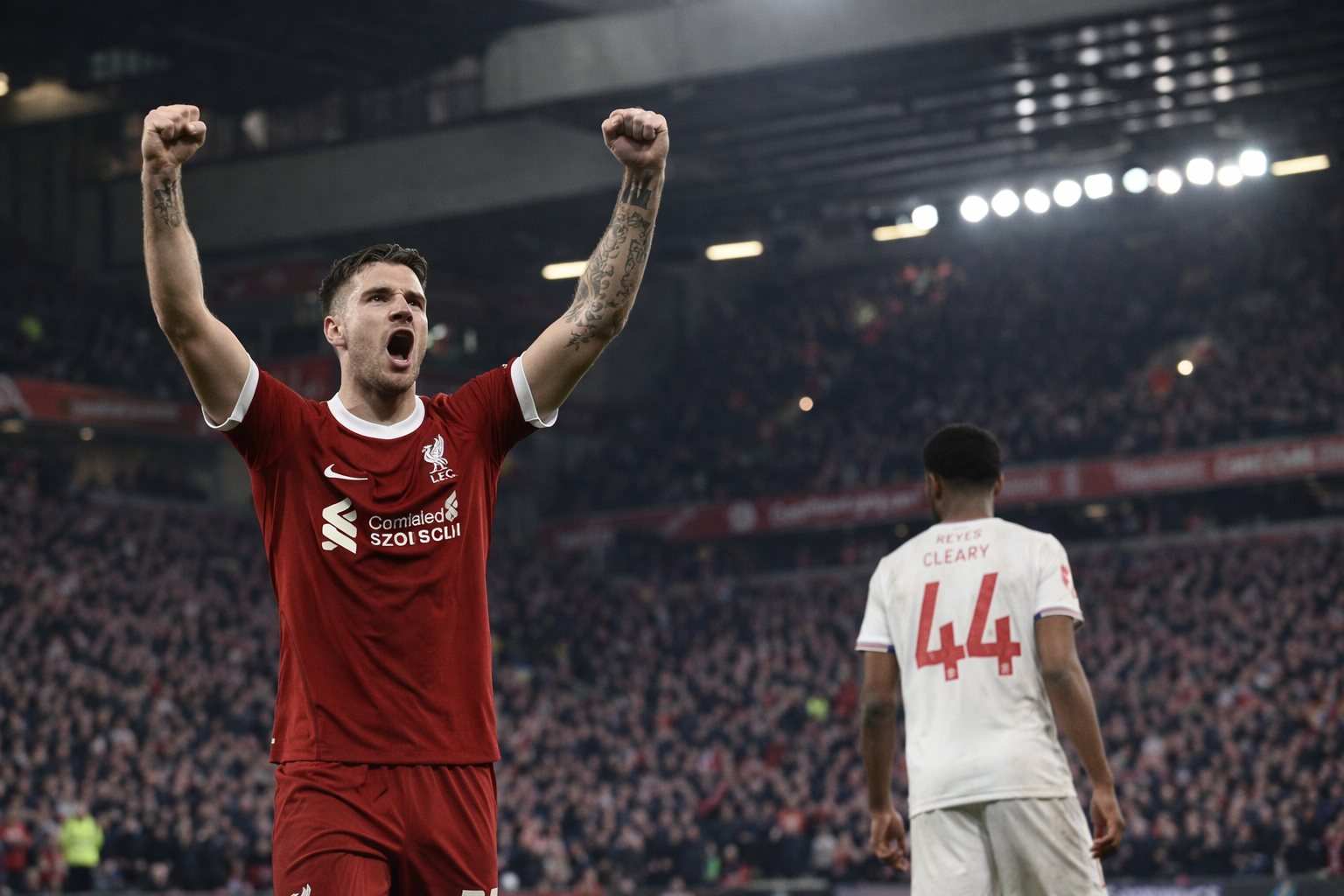
Liverpool FC booked their place in the fourth round of the Emirates FA Cup with a 4–1 win over Barnsley FC at Anfield, though the scoreline only partially reflected the nature of a tie that demanded patience and control from the Premier League side. In front of a lively home crowd, Liverpool combined moments of attacking quality with spells of vulnerability before eventually asserting their superiority late on.
The third-round tie, played against a Barnsley side sitting well below Liverpool in the English football pyramid, served as a reminder of the FA Cup’s capacity to test even elite teams. While Liverpool progressed as expected, the performance offered both encouragement and areas for reflection as the competition moves into its latter stages.
Early Control and a Self-Inflicted Setback
Liverpool began the match with authority, dictating possession and pushing Barnsley deep from the opening exchanges. That control was rewarded when Dominik Szoboszlai opened the scoring with a powerful long-range strike that gave the hosts an early platform. The goal underlined Liverpool’s technical edge and suggested a comfortable afternoon might follow.
However, the contest shifted unexpectedly when a misplaced backheel from Szoboszlai inside his own half was intercepted, allowing Barnsley to capitalise and equalise through Adam Phillips. The goal lifted the visitors and briefly unsettled Liverpool, with Barnsley pressing aggressively and showing little sign of intimidation despite the surroundings.
Reds Reassert Authority Before the Break
Liverpool’s response was measured rather than frantic. Rather than chasing the game, they returned to controlling territory and possession, gradually forcing Barnsley backwards. That composure paid off before half-time when Jeremie Frimpong restored the lead with a well-timed run and composed finish.
The second goal proved important psychologically, easing pressure on the hosts and ensuring they entered the interval with renewed confidence. Barnsley, while still competitive, were increasingly forced to defend deeper as Liverpool’s passing rhythm improved.
Late Flourish Keeps Reds Comfortable
As the second half wore on, Liverpool’s depth began to tell. The introduction of fresh attacking options stretched Barnsley’s defensive shape, and the visitors’ early intensity inevitably faded. Florian Wirtz added a third goal in the closing stages with a composed finish, before Hugo Ekitike sealed the tie in stoppage time to give the scoreline a more decisive look.
While Liverpool never fully ran away with the contest until late on, the closing goals reflected their growing dominance as fatigue set in for Barnsley.
Match Control in Numbers
Liverpool finished the tie with close to 70 per cent possession and registered more than 15 shots across the 90 minutes, underlining their territorial control despite Barnsley’s willingness to press. The visitors produced fewer than ten attempts but remained competitive in transition, particularly during the first half. Liverpool’s passing volume and pressing intensity increased noticeably after the interval, allowing the hosts to manage the latter stages with greater control.
Team Selection and Injury Context
Ahead of the match, Liverpool head coach Arne Slot opted for a strong but balanced starting line-up, mixing regular first-team players with rotation options. The decision reflected both respect for the competition and an awareness of the club’s recent FA Cup history, where early exits have proved costly in momentum terms.
Injury concerns remained part of the backdrop. Several squad players were unavailable, while others returned cautiously following fitness issues. Mohamed Salah’s continued absence due to international commitments also shaped Liverpool’s attacking structure, placing greater creative responsibility on midfield runners and wide players.
Tactical Decisions and Managerial Perspective
Slot’s tactical approach prioritised control through midfield, with Liverpool encouraged to recycle possession patiently rather than force openings. The emphasis on positional discipline became especially important after Barnsley’s equaliser, which briefly disrupted Liverpool’s rhythm.
Speaking after the match, Slot said his side “responded well after conceding the equaliser” but acknowledged there were “periods where better control was needed”, particularly against an opponent prepared to press with intensity. The comments reflected a measured assessment rather than outright satisfaction, highlighting the standards being applied internally.
Barnsley’s Creditworthy Display
For Barnsley, the trip to Anfield represented a significant occasion, and their performance justified the sense of occasion. Despite the eventual scoreline, the League One side showed organisation, bravery and attacking intent, particularly during the opening hour.
Manager Conor Hourihane praised his players’ approach afterwards, noting that they had embraced the challenge rather than retreating into a purely defensive mindset. While the gulf in resources ultimately proved decisive, Barnsley’s showing offered encouragement as they refocus on domestic priorities.
FA Cup Context and What Comes Next
Liverpool’s progression sets up a fourth-round tie at Anfield, where the level of opposition is expected to rise sharply. The FA Cup remains one of the club’s most realistic routes to silverware this season, and maintaining focus against lower-league opponents is a prerequisite for deeper runs.
The result keeps Liverpool’s FA Cup campaign on track at a point in the season when squad rotation, injury management and fixture congestion are becoming increasingly significant. For Slot, the challenge will be to retain intensity while continuing to integrate depth options without sacrificing control.
A Professional, If Imperfect, Step Forward
Liverpool’s win over Barnsley ultimately delivered what mattered most: progression. Yet the performance also served as a useful examination of game management, concentration and response under pressure. The Reds’ quality told in the end, but the contest reinforced that margin for error narrows quickly in knockout football.
For Barnsley, the defeat brought an end to their FA Cup run but not without moments to take pride in. For Liverpool, the journey continues, with lessons learned and the competition’s demands only set to increase from here.
