


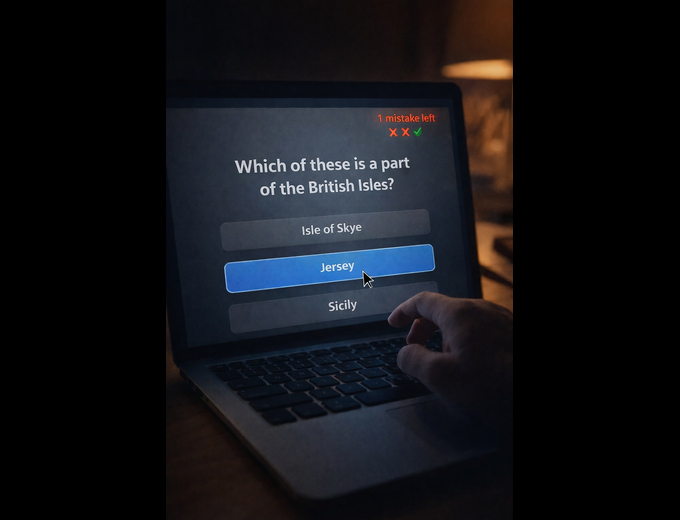
For years, daily digital puzzles have belonged to word games. Wordle became a ritual. Quordle and Connections followed. But a quieter contender is steadily gaining attention among trivia lovers. The Tightrope game, launched by Encyclopaedia Britannica, is building momentum among players who prefer knowledge over wordplay.
The format is simple. Each day, users answer nine general knowledge questions. Three wrong answers end the round. There are no levels, no upgrades and no distractions. The challenge rests entirely on what you know.
In an era when attention spans are short but curiosity remains strong, Tightrope sits neatly between entertainment and education.
A Daily Challenge Built on Knowledge
The appeal of Tightrope lies in its restraint. Players receive a fixed set of questions covering subjects such as science, history, geography, literature and culture. The goal is straightforward. Stay on the rope by answering correctly. Fall three times and the session ends.
That tension creates quiet pressure. Unlike open-ended trivia apps that allow unlimited attempts, Tightrope limits opportunity. You get one shot each day.
The format echoes the structure that helped Wordle capture global attention. A short task. A shared daily experience. A fresh reset every morning. But while word puzzles test pattern recognition and deduction, Tightrope measures breadth of knowledge.
For some, that distinction makes all the difference.
The Growth of the Daily Brain Habit
Daily puzzle culture has expanded significantly in recent years. What began as a niche pastime has become part of many people’s routines. Commuters complete word grids on trains. Office workers tackle quick challenges during coffee breaks. Students use them as light mental warm-ups before study.
The appeal is psychological. Small daily tasks create a sense of accomplishment without demanding long stretches of focus. Five minutes of trivia offers stimulation without fatigue.
In the UK, this format resonates particularly well. Britain has a long-standing affinity for quizzes, from pub trivia nights to television staples such as University Challenge. Testing knowledge carries cultural weight.
Tightrope taps into that instinct without requiring a team or a stage.
Backed by Authority
One factor that sets Tightrope apart is its publisher. Encyclopaedia Britannica is one of the world’s oldest reference institutions. That association lends the game credibility.
Players are not simply engaging with randomised internet questions. The content comes from an organisation historically associated with curated, verified knowledge. In an age when misinformation circulates rapidly, that background matters.
The educational undertone is subtle but present. While the game is not marketed as a learning tool, it naturally reinforces recall and curiosity.
A Different Kind of Competition
It would be easy to describe Tightrope as another attempt to replicate Wordle’s success. Yet the experience feels different. Word games encourage sharing and visible streaks. Trivia feels more internal.
There is no coloured grid to post online. No public score to compare. The reward is personal satisfaction.
That quieter dynamic may explain why its growth has been steady rather than explosive. It does not rely on virality. It relies on habit.
For many players, that is enough.
Educational Without Feeling Instructional
Each question offers a small retrieval exercise. You either know the answer or you do not. When you miss one, curiosity often follows. Why was that correct? What did I overlook?
Those moments mirror established learning techniques based on recall and reinforcement. Yet because they occur in a game setting, they feel voluntary rather than academic.
For adults seeking light mental exercise, or students revising broad subject areas, the format offers structure without pressure.
Not Without Limitations
Like all trivia games, Tightrope has its constraints. Question difficulty can vary, and the absence of deeper explanations may limit extended learning. Some users prefer longer sessions or category-specific challenges.
There is also the broader concern of digital overload. Even short daily habits add to screen time.
However, the game’s brevity works in its favour. It encourages moderation rather than immersion.
Why It Could Gain Further Ground
The ingredients for broader appeal are already in place. The game is free, accessible through a browser and short enough to fit into a busy schedule. Most importantly, it complements existing puzzle routines rather than competing directly with them.
As digital leisure continues to favour concise, repeatable experiences, trivia-based formats may expand alongside word puzzles. Knowledge games appeal to a slightly different instinct. They reward what you remember, not how cleverly you guess.
Tightrope may never dominate social feeds. Yet its quiet rise reflects something enduring. In a world saturated with endless content, a simple daily question can still capture attention.
And each morning brings the same invitation. Step onto the rope. See how far you can go.
