


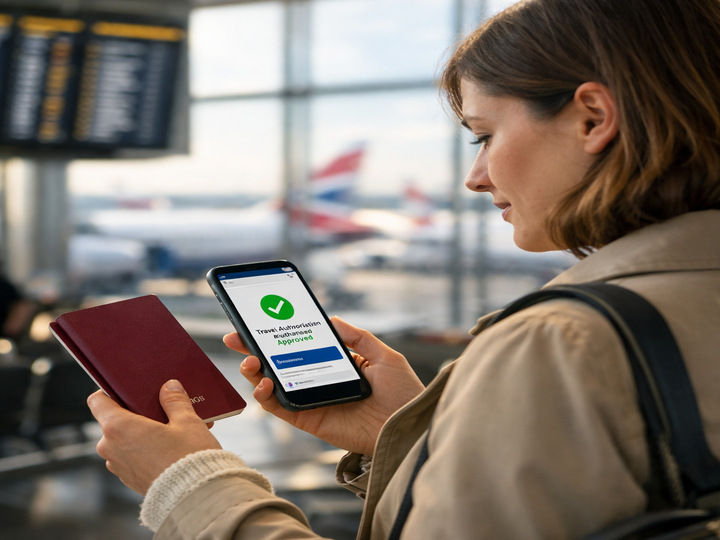
From 25 February 2026, travellers arriving in the United Kingdom without a visa must obtain a new digital permission before departure. The government says the system strengthens border security while modernising entry procedures, but airlines and travellers face a significant adjustment.
UK Travel Digital Permission Becomes Mandatory
The UK has formally introduced a new UK travel digital permission requirement for millions of international visitors, marking one of the most significant changes to border entry rules since Brexit.
Under the new system, travellers who do not require a visa must secure electronic authorisation before travelling to the United Kingdom. The requirement took effect on 25 February 2026 and applies to eligible visitors arriving by air, sea or rail.
Officials describe the move as part of a broader transition towards a fully digital border. The scheme mirrors electronic travel authorisation systems already operating in countries including the United States, Canada and Australia.
Passengers without approved digital permission may be refused boarding by airlines or transport operators, shifting responsibility for compliance partly onto carriers before travellers even reach UK border control.
How the UK Travel Digital Permission System Works
The UK travel digital permission operates as a pre-travel screening process rather than a visa. Visitors complete an online application providing passport details, travel information and basic security declarations.
Once approved, the permission becomes digitally linked to the traveller’s passport. Border officers then verify entry status electronically on arrival, removing the need for physical documents or stamps.
The Home Office has said most applications should receive decisions quickly, often within days, although travellers are advised to apply well ahead of departure to avoid disruption.
The permission applies primarily to short-term visitors entering for tourism, business trips, short study periods or family visits. Irish citizens and individuals who already hold UK visas or immigration status remain exempt.
Government guidance emphasises that approval does not guarantee entry. Border Force officers retain authority to question passengers and refuse admission where necessary.
How to Apply for an ETA
Applications take place online via the official GOV.UK website or the dedicated UK ETA app. The process requires a passport scan, personal details and answers to suitability questions. The fee stands at £16, with most approvals granted within minutes, though the Home Office advises allowing up to three days in case of additional checks.
The ETA remains valid for two years or until the passport expires whichever comes first and permits multiple visits of up to six months each. Applicants must ensure passport details match exactly those used for travel, as mismatches trigger automatic checks by carriers.
Since the scheme’s launch in October 2023, authorities have issued more than 24 million ETAs by late 2025, with the figure climbing further into 2026. Revenue from fees exceeding £383 million by January 2026, supports ongoing enhancements to border security and immigration processing.
Why the UK Introduced Digital Permission to Travel
Ministers have framed the change as part of the UK’s long-term border modernisation strategy. The aim is to identify potential security risks before travellers begin their journey rather than at the physical border.
The Home Office has argued that advance passenger screening allows authorities to conduct automated checks against criminal and immigration databases. Officials say this improves security while enabling faster processing for legitimate visitors.
The policy also reflects a wider international shift towards digital mobility management. The European Union plans to launch its own Electronic Travel Information and Authorisation System (ETIAS), expected to apply to British travellers visiting the Schengen Area.
Security specialists note that electronic authorisation schemes became more common after governments sought greater visibility over cross-border movement following the pandemic and increased global migration pressures.
Impact on Tourists, Airlines and Travel Operators
The introduction of UK travel digital permission represents a practical change for travellers who previously only needed a passport to enter the country.
Airlines and ferry operators must now verify passenger eligibility before departure. Industry groups have warned that early implementation periods often lead to confusion among travellers unfamiliar with new requirements.
UK aviation officials have urged passengers to check entry conditions well in advance, particularly during peak travel seasons when delays can cascade across flight networks.
Tourism organisations have largely welcomed the promise of quicker border processing but acknowledge short-term adjustment challenges. The UK remains one of the world’s most visited destinations, receiving tens of millions of international visitors annually before pandemic disruption.
Travel analysts say smoother automated entry could ultimately reduce queues at major hubs such as Heathrow, Gatwick and Manchester airports, provided travellers comply with the new system.
What Travellers Need to Know Before Visiting the UK
Authorities stress that travellers must obtain approval before beginning their journey. Applications completed at the airport or port immediately before travel may not receive decisions in time.
Transport operators can deny boarding if digital permission is missing or invalid, meaning passengers may face additional costs or travel disruption.
The requirement applies regardless of whether visitors plan to stay only briefly or transit through the UK border system. Travellers should also ensure passport details entered during application match travel documents exactly, as mismatches can trigger refusals.
Officials recommend checking official government guidance rather than relying on third-party travel websites, as eligibility rules vary by nationality and immigration status.
Economic and Security Implications for the UK
The rollout arrives as the UK attempts to balance economic recovery in tourism with heightened border security expectations.
Tourism contributed billions to the British economy before Covid-19 restrictions, supporting jobs across hospitality, retail and transport sectors. Policymakers hope digital systems will allow visitor numbers to grow while maintaining stricter migration oversight.
Security analysts argue that advance screening reduces pressure on border officers by filtering high-risk cases earlier. However, civil liberties groups have previously raised concerns about automated decision-making in immigration systems, calling for transparency in how risk assessments operate.
Government representatives insist safeguards remain in place, including human review processes and appeal mechanisms where applications are refused.
