


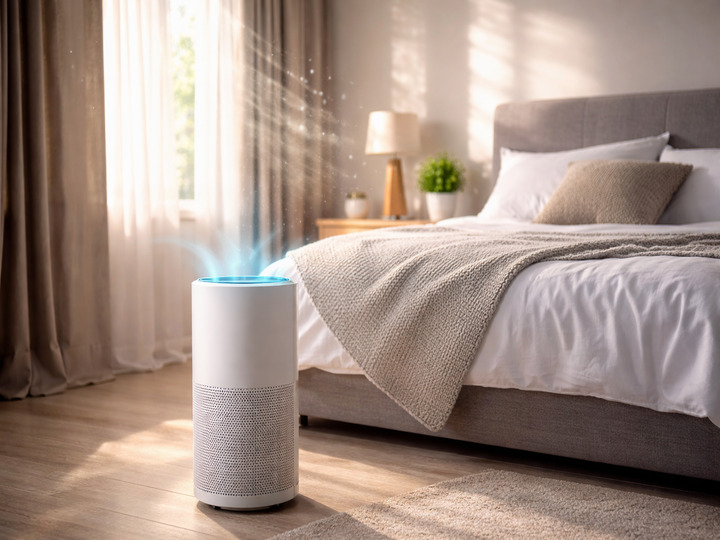
Searches for the best air purifiers for allergies have climbed sharply across the UK as hay fever season intensifies and concerns over indoor air quality grow. Independent testing suggests performance varies widely between models, with filtration standards and room size proving decisive factors.
Demand for the best air purifiers for allergies is increasing as more households look for ways to manage hay fever, asthma and pet-related sensitivities. According to the Office for National Statistics, respiratory conditions remain a leading cause of GP consultations, while Allergy UK estimates that more than 21 million people in Britain suffer from allergic disease.
Air purifiers promise relief by removing airborne particles such as pollen, dust mites, mould spores and pet dander. However, consumer testing shows not all devices perform equally, particularly in larger rooms or properties with open-plan layouts common in modern UK housing.
Why indoor air quality matters for allergy sufferers
Allergy symptoms are often associated with outdoor triggers such as tree and grass pollen. Yet studies from the Royal College of Physicians have highlighted that indoor air can be more polluted than outdoor air, especially in urban homes exposed to traffic emissions or in properties where cooking and cleaning products release volatile organic compounds.
Air purifiers aim to address this by drawing air through high-efficiency filters. The most effective units use HEPA filtration capable of trapping at least 99.97 per cent of particles as small as 0.3 microns. That includes most pollen grains and many fine dust particles.
Dr Adrian Morris, a consultant allergist frequently cited in UK allergy guidance, has previously noted that reducing indoor allergen exposure can complement medication but should not replace clinical treatment for moderate or severe asthma. This balance is central to understanding what air purifiers can realistically achieve.
Best air purifiers for allergies: what testing shows
Independent product testing in UK homes has focused on several core metrics: filtration efficiency, airflow rate, noise levels and energy consumption. Units that combine true HEPA filters with activated carbon layers tend to perform best in homes affected by both pollen and pet odours.
Room coverage is critical. Manufacturers typically specify square metre capacity, but laboratory conditions differ from real-life layouts. A device rated for 30 square metres may struggle in an open-plan living area exceeding that size. Experts recommend selecting a purifier rated for a larger space than the room in which it will operate.
Noise is another consideration. Allergy sufferers often run air purifiers overnight to reduce exposure while sleeping. Devices that exceed 50 decibels on higher settings can disturb rest, undermining overall health benefits.
Energy efficiency also matters amid rising electricity costs. Most mid-range models consume between 20 and 50 watts on standard settings, comparable to a traditional light bulb, but continuous use adds to annual household expenditure.
Smoke, pets and seasonal pollen
While many consumers search for the best air purifiers for allergies, broader environmental factors influence buying decisions. Wildfire smoke from continental Europe has, in recent summers, reached parts of southern England, contributing to spikes in particulate matter. Urban pollution in cities such as London and Birmingham also remains a concern, particularly near busy roads.
Activated carbon filters help remove smoke particles and some odours, but they require regular replacement to remain effective. Pet owners may notice improvement in dander levels, though hair and larger debris still require conventional cleaning.
The UK Met Office tracks pollen counts seasonally, with tree pollen typically peaking in spring and grass pollen in late spring to early summer. During high-count days, keeping windows closed and running an air purifier continuously may reduce indoor concentrations, though it cannot eliminate exposure entirely.
Medical guidance and realistic expectations
The National Institute for Health and Care Excellence does not currently recommend air purifiers as a standalone treatment for asthma. Instead, NICE guidance focuses on medication adherence, trigger avoidance and environmental control.
Air purifiers can form part of that environmental strategy, particularly in bedrooms where prolonged exposure occurs overnight. However, experts caution against marketing claims that suggest complete symptom elimination.
Professor Stephen Holgate, a leading UK asthma specialist, has emphasised in public research commentary that air quality interventions should complement clinical care rather than replace it. That perspective underscores the need for balanced consumer expectations.
Cost versus performance
Prices for air purifiers in the UK range from under £100 to more than £600. Higher-end models often include smart sensors that detect particulate levels and adjust fan speed automatically. Some integrate with mobile apps to track indoor air quality over time.
Testing suggests that mid-range models equipped with certified HEPA filters can deliver comparable allergen reduction to premium devices, provided they match room size. The ongoing cost of replacement filters, typically required every six to twelve months, adds between £30 and £80 annually depending on brand.
Consumers should also verify that “HEPA-type” or “HEPA-style” descriptions meet recognised standards. Only certified HEPA filters guarantee the 99.97 per cent efficiency threshold.
Ventilation versus filtration
Air purifiers do not replace ventilation. Opening windows improves airflow and reduces indoor carbon dioxide, but during high pollen days it may increase allergen exposure. Mechanical ventilation systems with filtration offer an alternative in some modern homes.
Public Health England has previously stressed that reducing indoor pollutants requires a combination of ventilation, source control and filtration. For households in high-traffic urban areas, balancing fresh air intake with filtration remains a practical challenge.
Why this matters for UK households
The rise in allergic conditions carries economic implications. Absenteeism linked to asthma and hay fever affects productivity across workplaces and schools. Improving indoor environments may contribute to symptom control, particularly during peak seasons.
Climate change may also influence allergy patterns. Warmer temperatures can lengthen pollen seasons and increase plant growth. As a result, demand for the best air purifiers for allergies is unlikely to subside in the near term.
For renters and flat dwellers, portable units offer a practical solution without structural modification. For homeowners, whole-house systems may provide broader coverage but require significant investment.
The broader air quality picture
Government policy continues to address outdoor air pollution through emission standards and urban clean air zones. However, indoor air quality regulation remains limited compared with workplace standards.
Consumer awareness has grown since the Covid-19 pandemic, when attention turned to ventilation and airborne particles. That awareness now extends to allergens and particulate matter more generally.
Air purifiers represent one tool within a broader public health conversation. Their effectiveness depends on correct sizing, maintenance and integration with other allergy management strategies.
As hay fever season approaches and urban pollution persists, households will continue to weigh cost against potential relief. For many, the decision will rest on balancing medical advice, household budget and the practical realities of UK housing.
