


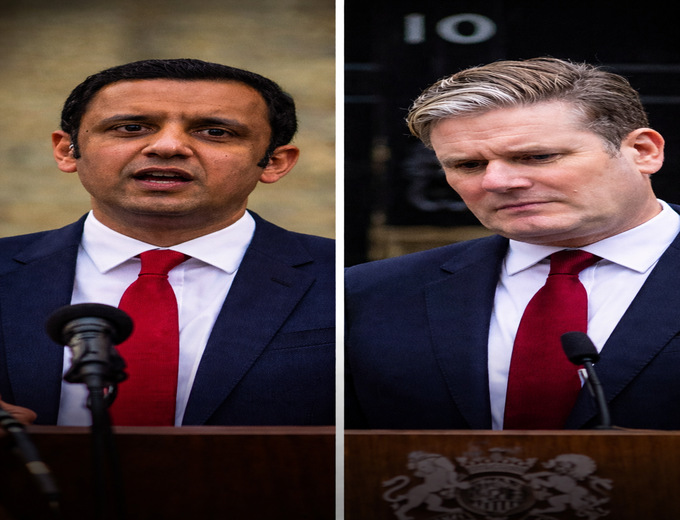
Scottish Labour leader Anas Sarwar has publicly called for Keir Starmer to step down as both prime minister and leader of the Labour Party, in what marks one of the most serious internal challenges to Starmer’s authority since the party’s return to government. Speaking at a press conference in Glasgow on 9 February 2026, Sarwar said that leadership under Starmer had become a “huge distraction” and that “too many mistakes” had been made, undermining Labour’s standing ahead of crucial elections.
The intervention from Sarwar comes amid a political crisis triggered by revelations about the appointment and subsequent resignation of Peter Mandelson as the United Kingdom’s ambassador to the United States, and a growing backlash over internal party management. The controversy has already led to the resignations of two senior aides in Downing Street, intensifying questions over Starmer’s leadership.
Sarwar frames resignation call around Scottish political concerns
At the news conference, Sarwar; who has led Scottish Labour since 2021, insisted that his priority was the political future of Scotland rather than personal loyalty to Starmer. He said that persistent issues emanating from Downing Street had strained his confidence and risked jeopardising Labour’s prospects in the May 2026 Scottish Parliament election. Polls indicate the party is trailing rival Scottish National Party and emergent Reform UK, heightening pressure on Labour’s campaign strategy.
Sarwar acknowledged that the decision to break with Starmer publicly was not taken lightly, emphasising that he had previously campaigned alongside the prime minister and regarded him as a friend. “My first priority and my first loyalty has to be to my country, Scotland,” Sarwar said, arguing that leadership change was necessary to prevent broader political fallout.
Fallout from the Mandelson-Epstein revelations
The crisis gripping the Labour leadership stems from fallout over Starmer’s controversial appointment of Lord Peter Mandelson as ambassador to the U.S. despite Mandelson’s past association with the late paedophile financier Jeffrey Epstein, and subsequent public scrutiny of that relationship. Starmer dismissed Mandelson from his diplomatic role last year after emails emerged detailing the former minister’s continued contact with Epstein.
That episode has eroded trust among some Labour figures and supporters, with Sarwar stating that the missteps emanating from Downing Street had become impossible to overlook. The resignations of Starmer’s chief of staff, Morgan McSweeney, and his director of communications, Tim Allan, in rapid succession have added to perceptions of instability within the administration.
Reactions within Labour and beyond
Sarwar’s call for Starmer’s resignation has not been universally embraced within the party. Deputy Prime Minister David Lammy and senior minister Steve Reed publicly reiterated their backing for Starmer, highlighting his role in Labour’s decisive 2024 general election victory and urging the party to remain focused on delivering its manifesto commitments.
Those supportive of Starmer stress that internal unity is essential for tackling major national issues from economic challenges to public services and warn that leadership upheaval could distract from governance. However, critics argue that prolonged internal conflict could further erode public confidence, particularly if the party appears preoccupied with infighting rather than policy delivery.
Outside Labour, opposition figures and commentators have seized on the controversy, with calls from rival parties for Starmer to either resign or face a formal no-confidence process in Parliament. The wider political context includes debates over public trust in government institutions and enduring concern over political accountability following high-profile controversies.
Implications for upcoming elections
The timing of Sarwar’s intervention is significant. With the Scottish Parliament election just months away, Labour’s internal divisions risk undermining the party’s appeal to voters seeking stable leadership. Sarwar’s argument centres on the idea that a new national leadership could strengthen Labour’s position north of the border and stem further losses to nationalist and populist rivals.
Analysts suggest that if Labour fails to present a coherent message on leadership and policy priorities, both in Scotland and across the UK, its electoral prospects could suffer. For Scottish Labour in particular, the balance between advancing distinct regional priorities and aligning with the UK leadership has emerged as a central tension ahead of votes later this year.
Starmer resists pressure and asserts mandate
In response to Sarwar’s remarks, Downing Street officials have reiterated that Sir Keir Starmer has no intention of stepping down. Starmer’s camp points to his electoral mandate from the 2024 general election when Labour won a commanding majority and insists that his leadership remains focused on delivering economic stability, public services reform and social policy goals.
Starmer’s defenders highlight that internal debate and dissent are intrinsic aspects of democratic politics, and that the party must navigate criticism while remaining unified on core priorities. At the same time, some senior Labour figures caution that persistent controversy could distract from legislative work and public engagement.
