


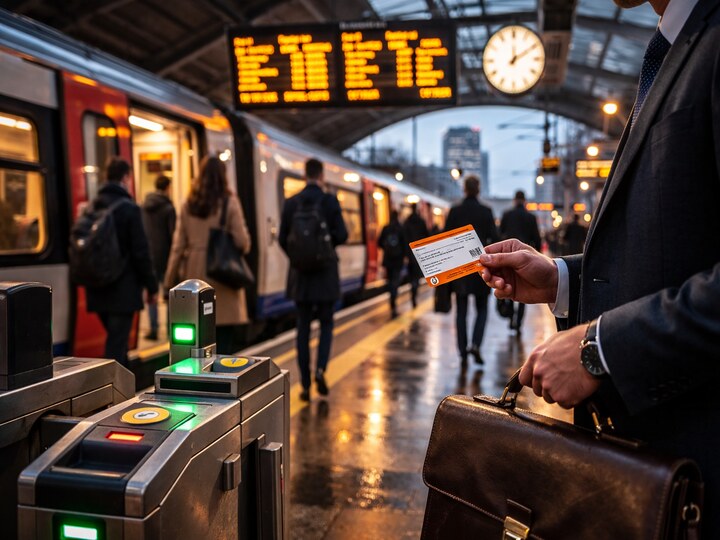
An HSBC banker has been accused of avoiding thousands of pounds in rail costs by exploiting a ticketing loophole, prompting renewed scrutiny of fare enforcement across the UK network. The case has intensified debate over revenue protection and the integrity of Britain’s complex rail pricing system.
The HSBC banker train fare case has drawn national attention after reports that a senior finance professional allegedly sidestepped substantial ticket costs by manipulating a booking method within existing rail systems. The incident centres on the use of split ticketing and route variations to reduce the price of frequent commuter journeys.
According to court reporting, the banker travelled regularly between home and workplace yet purchased tickets in a way that significantly reduced the amount paid compared with standard peak fares. Prosecutors argued that the approach breached railway byelaws and constituted fare evasion.
How the HSBC banker train fare issue unfolded
Rail operators rely on a system governed by the National Rail Conditions of Travel, which set out the rules passengers must follow when purchasing and using tickets. While split ticketing itself is legal in many circumstances, passengers must ensure the train stops at each station named on their tickets.
The HSBC banker train fare case reportedly involved purchasing cheaper tickets for segments of a journey without always complying fully with stopping requirements. Revenue protection officers identified discrepancies during routine checks, triggering further investigation.
Under the Regulation of Railways Act 1889 and related legislation, travelling without a valid ticket can result in prosecution, fines and a criminal record. Courts assess whether passengers intended to avoid payment or simply misunderstood complex fare structures.
The banker is said to have repaid significant sums once the issue came to light, though the matter proceeded to legal scrutiny due to the scale involved.
The cost of commuting in Britain
Rail fares in England and Wales rose by up to 4.9 per cent in 2025, following earlier increases tied to inflation. For many commuters, annual season tickets cost several thousand pounds, particularly on routes into London.
The Office of Rail and Road reports that fare evasion costs the industry hundreds of millions of pounds each year. Those losses ultimately feed into ticket prices, taxpayer subsidy requirements and service funding.
Public frustration over rail pricing has fuelled the growth of ticket-splitting websites and apps that identify cheaper combinations of valid tickets. These platforms operate within the rules but highlight inconsistencies in fare calculations.
The HSBC banker train fare case sits within this wider context of passengers navigating a complicated and often opaque pricing system.
Legal boundaries of split ticketing
Split ticketing remains lawful provided each segment covers a portion of the journey and the train calls at all relevant stations. Problems arise when passengers travel on services that do not stop at intermediate points specified on tickets.
Rail companies invest in revenue protection teams trained to identify anomalies. Technology now allows operators to track patterns of repeated travel that deviate from standard fare usage.
Legal experts note that intent plays a central role in court decisions. Deliberate attempts to exploit technical loopholes may attract harsher penalties than isolated mistakes.
The HSBC banker train fare allegations underline the fine line between legitimate cost-saving and rule-breaking.
Impact on public trust
Cases involving high-earning professionals can intensify public reaction. Rail passengers already face crowded trains, service disruptions and fare rises. Reports of large-scale fare avoidance risk undermining confidence in fairness across the system.
Rail operators emphasise that enforcement protects honest passengers who pay the correct fare. The Rail Delivery Group has previously stated that consistent action against fare evasion remains essential to maintaining revenue streams.
At the same time, consumer groups argue that complexity contributes to confusion. They call for simplified pricing structures and clearer guidance.
Financial sector implications
While the legal matter concerns rail regulations rather than banking conduct, employers often review reputational risks when staff face public legal proceedings.
HSBC, one of Britain’s largest banking institutions, has internal codes of conduct governing employee behaviour. Large financial organisations typically assess whether external legal issues intersect with professional standards.
The broader financial sector operates under oversight from the Financial Conduct Authority, which regulates market integrity and professional behaviour. However, rail fare disputes generally fall outside direct regulatory scope unless linked to dishonesty in professional duties.
Why the HSBC banker train fare case matters
This case resonates beyond one individual. It highlights tension between rising living costs and public expectations of compliance with transport rules.
Commuters often search for savings in response to sustained cost pressures. Yet enforcement bodies stress that exploiting loopholes carries legal risk.
The UK government has pledged long-term rail reform, including plans to simplify ticketing under the proposed Great British Railways framework. Policymakers argue that clearer fares could reduce both accidental breaches and deliberate misuse.
In the meantime, existing legislation remains in force. Courts continue to apply established standards when determining liability.
Rail reform and revenue protection
The government’s rail reform programme aims to streamline ticket types and introduce more flexible options for part-time commuters. Officials say modernisation could reduce incentives for complex workarounds.
Digital ticketing and smartcard systems already allow operators to monitor travel patterns more precisely. While such systems improve efficiency, they also increase the likelihood that irregular usage will be detected.
Revenue protection remains a sensitive issue. Excessive enforcement risks alienating passengers, yet insufficient oversight could deepen financial losses.
The HSBC banker train fare case illustrates the consequences of operating near regulatory boundaries.
