


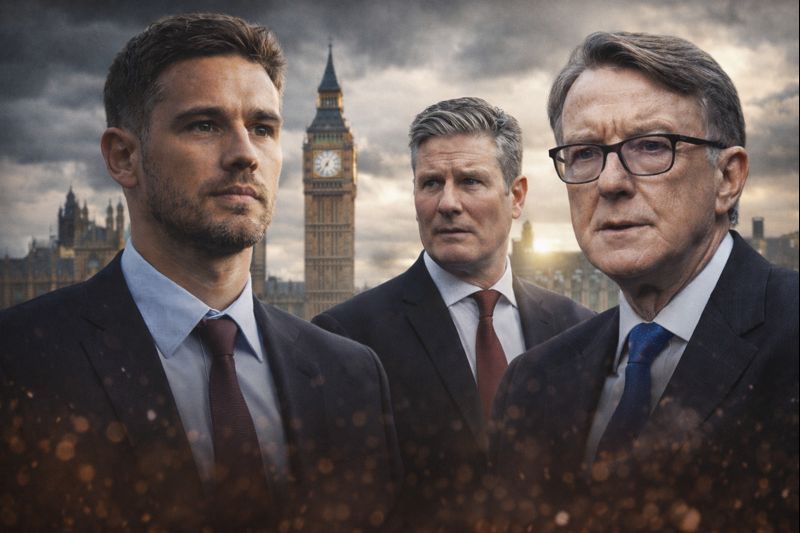
Morgan McSweeney, one of the most influential figures inside Downing Street, has come under growing scrutiny following the collapse of the government’s decision to appoint Peter Mandelson as the UK’s ambassador to the United States. The episode has raised wider questions about judgment, vetting and the concentration of power around Keir Starmer at a sensitive moment for the Labour government.
McSweeney, the Prime Minister’s chief of staff, has not commented publicly on the controversy. However, his central role in senior appointments and strategy has placed him at the heart of a political storm that has reverberated across Westminster and revived debates about how key decisions are made at the top of government.
A key figure behind the scenes
McSweeney has long been regarded as one of Starmer’s closest and most trusted advisers. A former Labour organiser and strategist, he played a significant role in reshaping the party after its 2019 election defeat and later became a central architect of Labour’s return to power. His appointment as chief of staff formalised an influence that many MPs and officials already recognised.
Supporters describe him as disciplined, strategic and focused on message control. Critics, including some within Labour, argue that his authority has become too concentrated, reducing internal challenge and narrowing the range of voices involved in major decisions. The Mandelson episode has brought those concerns into sharper focus.
The Mandelson appointment and its collapse
Mandelson’s selection as ambassador to Washington was announced amid claims that his experience and international contacts would strengthen Britain’s relationship with the United States. Yet the decision quickly drew criticism, not least because of longstanding questions surrounding Mandelson’s past association with the late financier Jeffrey Epstein, who died in prison in 2019 after being charged with sex trafficking offences.
Those concerns escalated dramatically after the release of US court documents referencing communications between Mandelson and Epstein. The documents prompted renewed media scrutiny and political pressure, with opponents questioning whether sufficient due diligence had taken place before the appointment was approved.
Within days, Starmer moved to dismiss Mandelson from the ambassadorial role, later describing aspects of the revelations as “disgraceful”. Mandelson subsequently stepped away from wider public roles, and the affair became one of the most damaging controversies to hit the government since the general election.
Questions over judgment and vetting
Attention has increasingly focused on how the appointment was cleared and who was responsible for assessing the political and reputational risks involved. As chief of staff, McSweeney sits at the centre of that process, coordinating between ministers, officials and advisers.
Opposition figures have argued that the affair reflects a failure of judgment at the heart of Downing Street. Some Labour MPs, speaking privately, have suggested that the warning signs around Mandelson were well known and should have prompted greater caution. They argue that the fallout has undermined the government’s emphasis on integrity and competence.
Downing Street has insisted that proper procedures were followed and that the Prime Minister acted decisively once new information came to light. Even so, the speed and scale of the reversal have fuelled speculation about whether internal challenge was sufficient before the appointment went ahead.
Pressure within Labour ranks
The controversy has exposed tensions within Labour between the leadership’s centralised approach and backbench concerns about transparency. Several MPs have expressed unease about the influence wielded by unelected advisers, arguing that political accountability becomes blurred when key decisions are shaped behind closed doors.
McSweeney’s allies counter that decisive leadership requires trusted advisers who can act quickly and decisively. They argue that the government’s willingness to reverse course shows that safeguards ultimately worked. For them, the risk lies in allowing internal dissent to paralyse decision-making at a time when the government faces major economic and diplomatic challenges.
Nonetheless, the Mandelson affair has given fresh momentum to calls for clearer oversight of senior appointments, particularly those involving national security or international representation.
Implications for Starmer’s leadership
For Starmer, the episode represents an early test of how his government handles controversy and internal accountability. The Prime Minister has built much of his political appeal on restoring trust in public life, and critics argue that the Mandelson saga has dented that narrative.
The decision to remove Mandelson quickly limited the immediate damage, but questions remain about how the appointment was allowed to proceed in the first place. Some commentators suggest that Starmer may face pressure to recalibrate the balance of influence within Downing Street, even if McSweeney’s position itself remains secure.
At the same time, removing or sidelining a chief of staff so early in a parliament would be a significant step, potentially signalling instability at the centre of government. For now, there is no indication that such a move is imminent.
A broader debate about power and accountability
Beyond individual personalities, the controversy has reopened a wider debate about how power is exercised in modern British politics. Successive governments have relied heavily on senior advisers, often blurring the line between political strategy and administrative decision-making.
The Mandelson episode highlights the risks of that model when appointments intersect with reputational or ethical concerns. It has also underscored the importance of rigorous vetting and the need for dissenting voices to be heard before decisions are finalised.
For many observers, the affair will serve as a case study in how quickly political capital can be lost when judgment is questioned, even if corrective action follows.
