


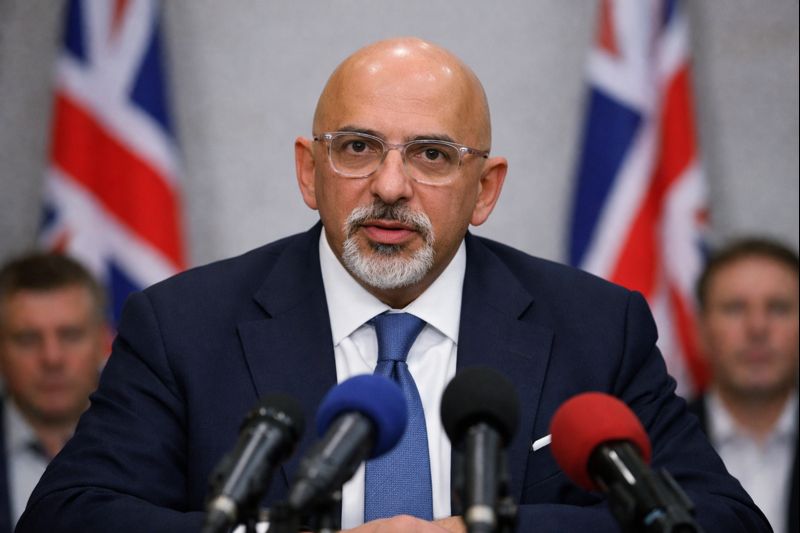
Former Conservative cabinet minister Nadhim Zahawi has joined Reform UK, a decision that has reignited debate about the future direction of right-leaning politics in Britain. The move, announced in January 2026, represents one of the most high-profile political defections in recent years and reflects mounting instability across the centre-right.
Zahawi’s decision comes at a time when traditional party loyalties appear increasingly fragile. Disillusionment among voters, long-running internal divisions, and questions over leadership have left the right of British politics in a state of flux. Against that backdrop, his defection has been interpreted as both a personal calculation and a sign of broader political change.
A Career Shaped by Power and Controversy
Zahawi was born in Baghdad in 1967 to a Kurdish family and came to the UK as a child. Before entering politics, he built a successful business career, most notably as a co-founder of polling firm YouGov. He was elected Conservative MP for Stratford-upon-Avon in 2010 and rose steadily through government ranks.
He held several senior posts, including education secretary and, briefly, chancellor of the exchequer. During the Covid-19 pandemic, Zahawi played a central role in overseeing the UK’s vaccine rollout, a period often cited by supporters as evidence of his organisational competence.
That record, however, sits alongside controversy. In early 2023, Zahawi was removed as Conservative Party chairman following an ethics investigation which concluded that he had breached the Ministerial Code by failing to properly disclose an ongoing tax inquiry. Although he accepted a settlement with HMRC, the episode damaged his standing and contributed to his decision not to contest the 2024 general election.
Why Zahawi Says He Is Changing Sides
At a press conference announcing his decision, Zahawi delivered a stark assessment of Britain’s political and economic state. He argued that the country faced deep structural problems and accused the political system of lacking the courage to pursue meaningful reform.
He also publicly backed Nigel Farage, describing him as the leader Britain now needs. Zahawi framed his move as a response to what he characterised as institutional stagnation and a failure of mainstream politics to deliver change.
The endorsement drew particular attention given Zahawi’s past criticism of Farage. Addressing that directly, he said he would not associate himself with anyone he believed held racist views. He described his decision as pragmatic rather than ideological, arguing that political realities had shifted.
Reaction Across the Political Spectrum
The response was immediate and divided. Figures within Farage’s party welcomed Zahawi as a senior political operator whose experience could help professionalise its organisation and broaden its appeal beyond protest politics.
Conservative figures were far less sympathetic. Several accused Zahawi of opportunism and argued that his long record in government undermined his credibility as a challenger to the political establishment. Others suggested the move highlighted ongoing identity problems within the party he once served.
Labour figures also criticised the decision, portraying it as further evidence of instability on the right. They argued that the defection reflected personality-driven politics rather than serious policy debate.
What the Move Means Strategically
For Zahawi’s new political home, the arrival of a former cabinet minister brings both opportunity and risk. His experience offers greater visibility and media attention, but it also invites closer scrutiny of a party that has historically operated on the margins of Westminster politics.
There are also ideological tensions to manage. Zahawi’s prominent role in the vaccine programme contrasts with scepticism expressed by some party figures during the pandemic. Bridging that gap will be important if the organisation hopes to appeal to a wider electorate.
Analysts suggest the move may help consolidate support among voters who feel alienated from the Conservatives but are not yet convinced by Labour. Whether that support can be converted into sustained parliamentary success remains an open question.
Legacy Questions That Will Persist
Zahawi’s political legacy is likely to remain contested. Supporters point to his business background and crisis-management experience as strengths. Critics argue that the tax controversy raised serious concerns about judgment and transparency.
Those questions are unlikely to fade as he takes on a more prominent public role. Indeed, by aligning himself with a movement that positions itself as anti-establishment, Zahawi may find his own record subjected to even greater scrutiny.
Implications for the Next General Election
With the next general election due by 2029, the defection adds to a sense of volatility on the right. Recent polling has indicated that Farage’s party is drawing support from disaffected Conservative voters in several regions, intensifying concerns about vote splitting.
For the Conservatives, the loss of a former senior figure underlines the challenge of rebuilding trust and coherence. For Labour, the reshaping of the right presents both opportunities and uncertainties in future electoral contests.
More broadly, the episode highlights a political environment in which established allegiances are weakening and senior figures feel increasingly free to break with tradition.
A Sign of a Changing Political Landscape
Zahawi’s move does not instantly transform the balance of power in Westminster. It does, however, point to a deeper realignment underway within British politics. Voters are more sceptical, party loyalty is less stable, and political careers are becoming less predictable.
Whether this decision proves to be a turning point or a footnote will depend on how events unfold over the coming years. What is clear is that it reflects a period of significant change on the British right, with consequences likely to extend well beyond one individual career.
